
The Chouara tannery from above
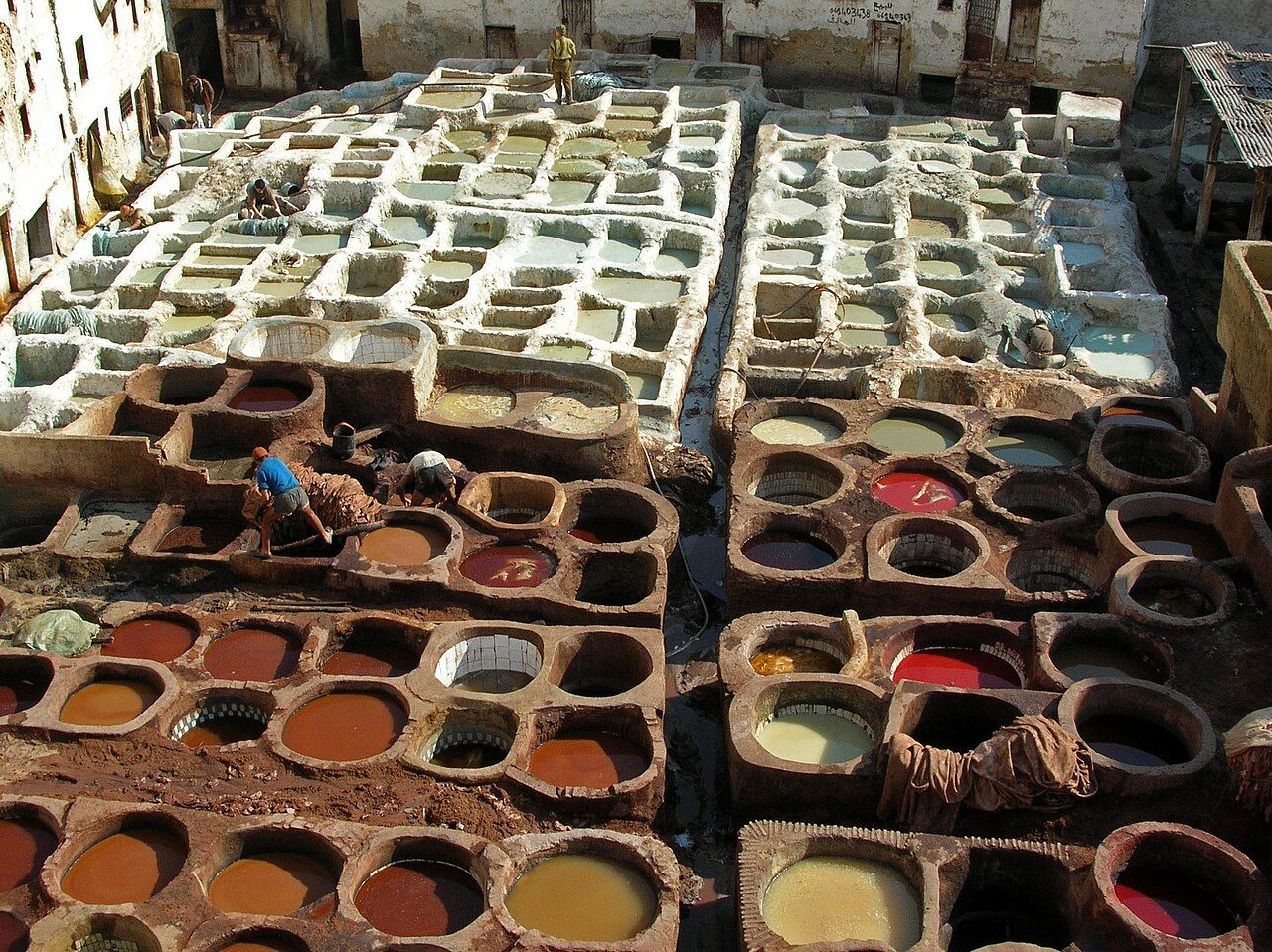
Below the terraces of the leather shops, workers move between hundreds of stone pits of lime and dye. It is loud, pungent and one of the oldest working sights in Fès.
- From Bab Bou JeloudAbout forty minutes downhill on foot
- PaceHalf day
- The way inDownhill to the river, near Seffarine
- BringSprig of mint, small change, comfortable shoes
You smell the Chouara tannery before you see it. Somewhere near the river, in the eastern part of Fès el-Bali, the lanes fill with a sharp, earthy odour, and leather goods start appearing in every doorway. Climb a staircase in one of the shops, step onto a terrace, and you are looking down at a honeycomb of stone pits, each filled with white liquid or coloured dye, with workers moving between them. It is one of the most famous views in Morocco, and one of the oldest working industries in the city.
A working tannery, centuries old
Fès has several tanneries, and Chouara is the largest and best known. It sits close to the river that runs through the medina, which gave it water for its work and a way to carry waste away. Tanning has been carried out on this site for centuries, and the basic layout of pits and drying terraces has changed little in that time.
It is a working place, not a museum. The men in the pits are doing hard, physical labour, often in difficult conditions, and the hides they handle become the bags, jackets, babouche slippers and poufs sold across the medina and beyond. The tannery was restored in the 2010s, with work on the pits, walls and surrounding buildings, but the work itself goes on much as before.
How hides are cured and dyed
The process takes weeks and moves through two broad stages, which you can see in the different areas below you.
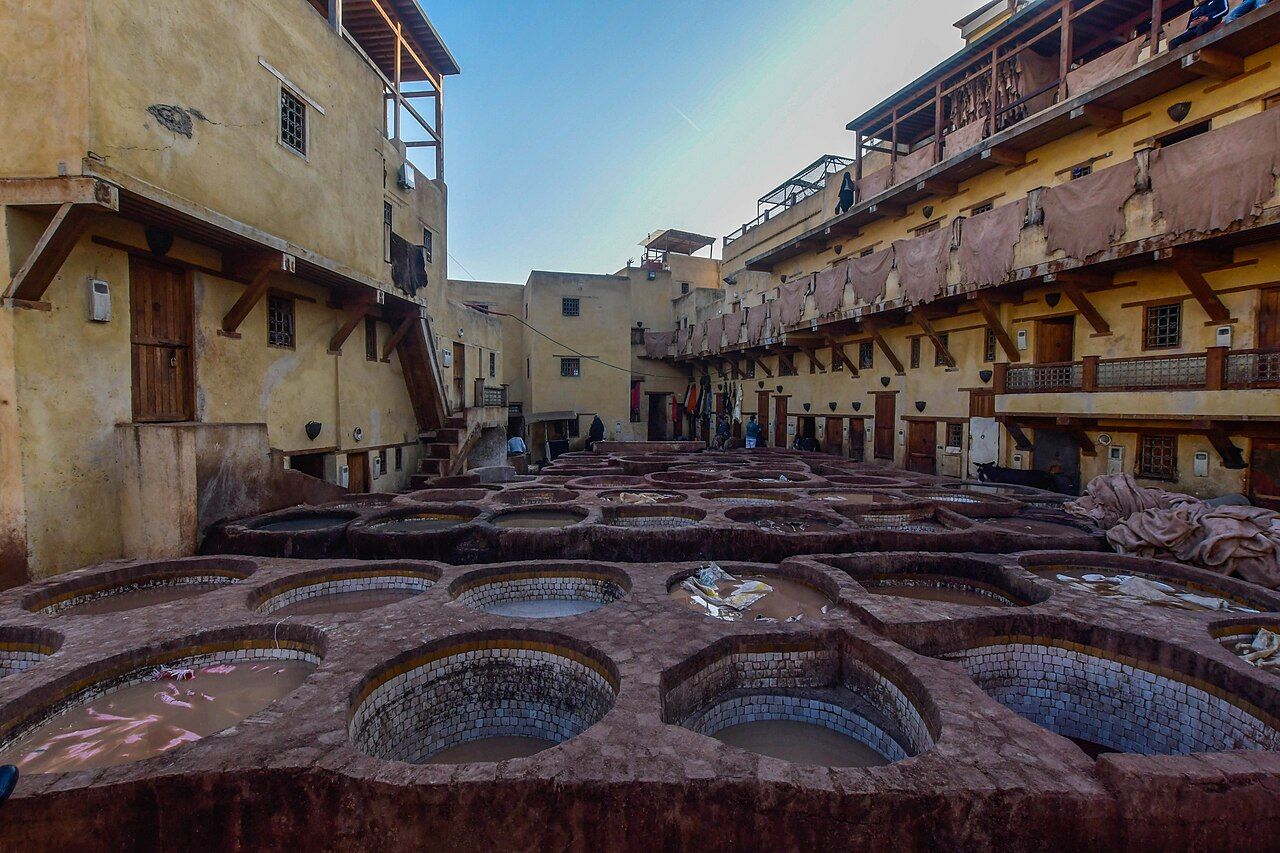
- Cleaning and softening. Raw hides of cow, sheep, goat and camel arrive and are soaked in the white pits. These traditionally contain a mixture with lime and other substances that loosens hair and flesh and begins to soften the skin. Pigeon droppings have long been used in this stage too, as a source of ammonia. Workers scrape and wash the hides by hand and by foot.
- Dyeing. The hides then move to the coloured pits, the brown and red and yellow ones, where they are worked in dye. Traditional colours come from plants and minerals: reds and browns from bark and other materials, yellow often associated with saffron or similar plants, blue from indigo. Some modern dyes are also used.
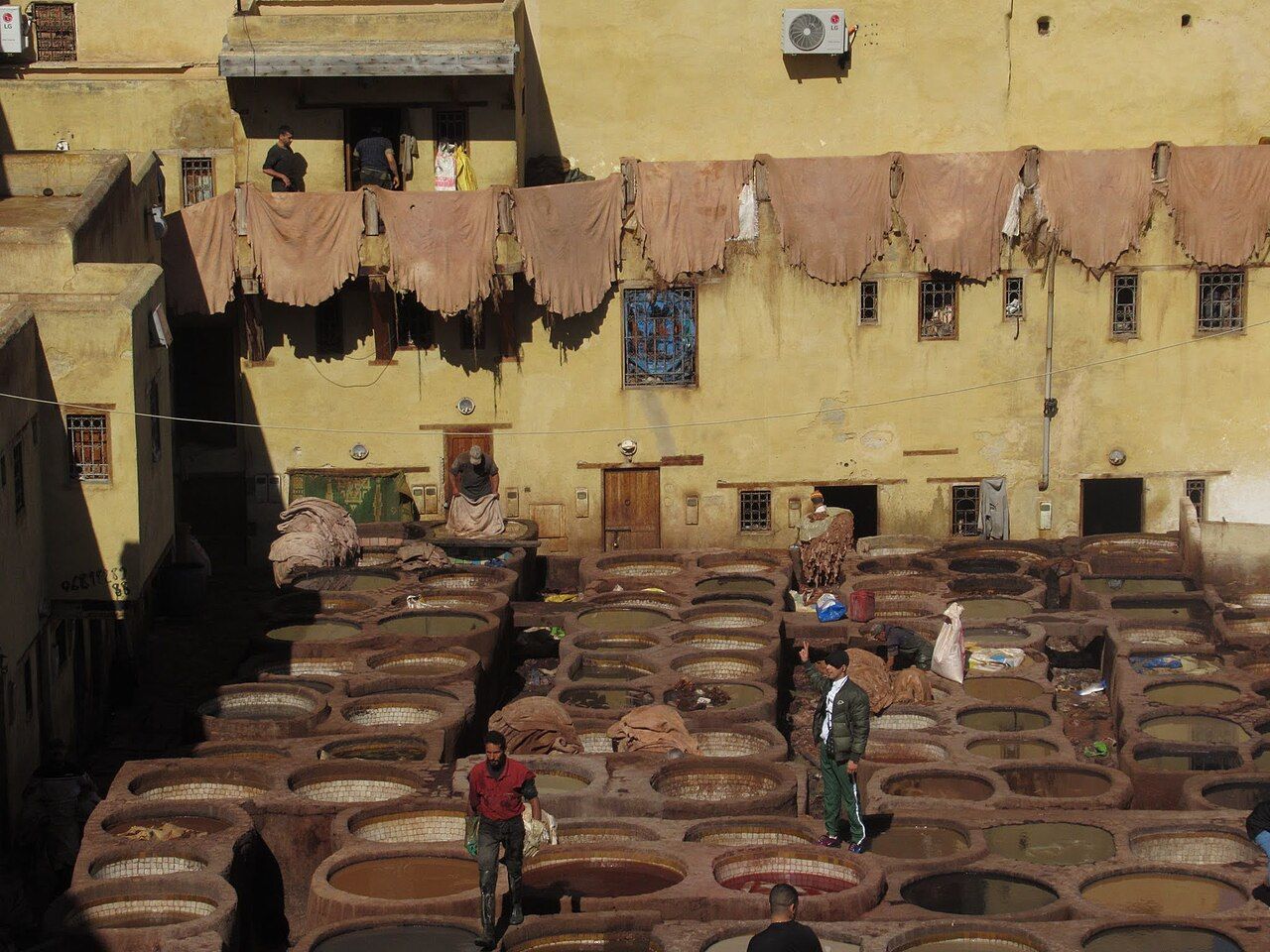
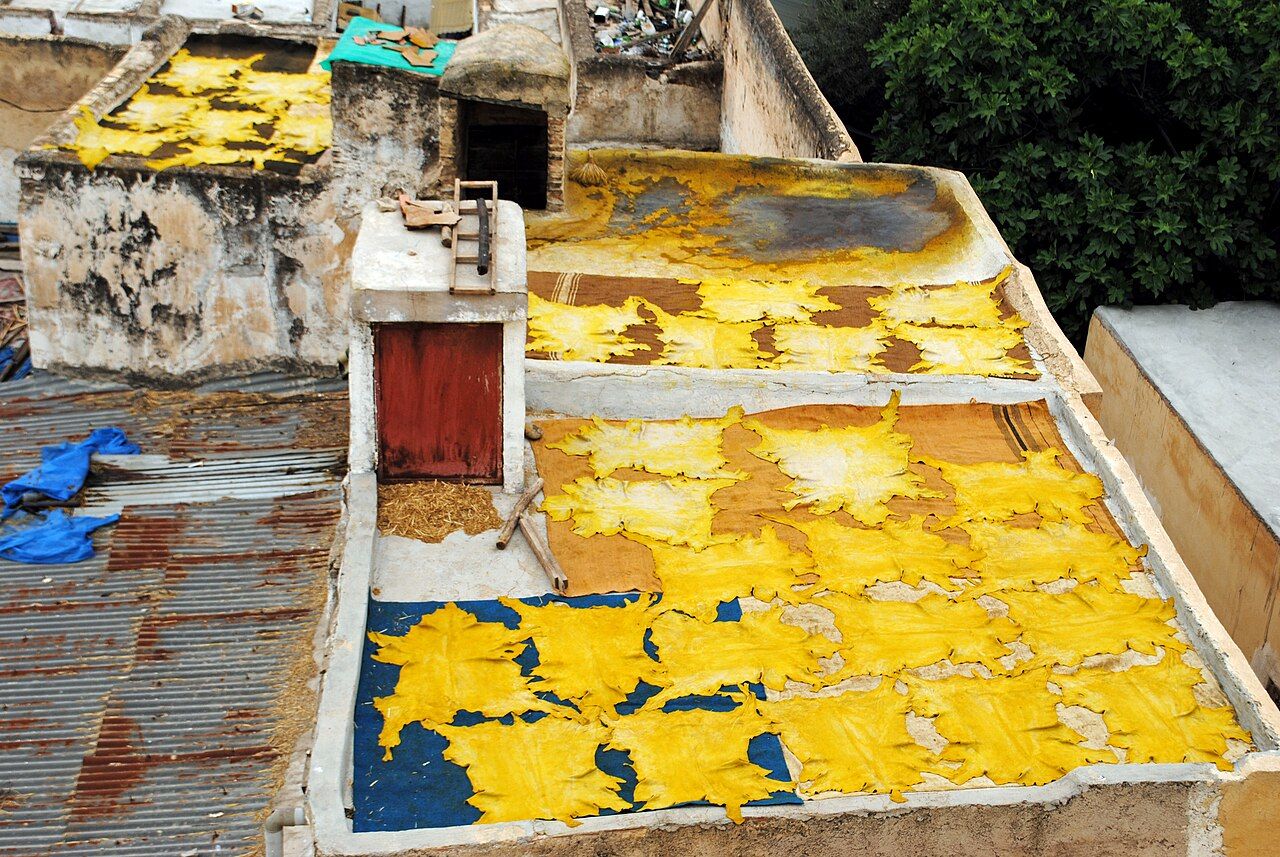
After dyeing, hides are stretched and dried, often on rooftops and terraces around the tannery, where you may see them laid out in the sun in rows of yellow or tan. Then they go to leatherworkers to be cut and stitched.
Why you watch from a shop terrace
There is no public viewing platform at Chouara. The tannery is enclosed by buildings, and the classic views are from terraces that belong to leather shops on the surrounding streets. To reach one you walk in through a shop, climb several flights of stairs past displays of bags and jackets, and come out above the pits.
This is how it has worked for a long time, and it is generally fine. Visitors are welcomed onto the terraces because the shops hope they will buy something. Nobody is obliged to, but it is fair to take that into account: you are using a private space, and a small tip for the person who shows you up is a common courtesy if you leave without buying.
You may be met on the way by people offering to lead you to "the best terrace". Some are connected to particular shops. You may also hear that the tannery is closed today, or only open for a short time, and that you should follow quickly. It is rarely true. Walk on calmly; when you are near the tannery, signs and shopkeepers will point you upstairs. Our guide to finding your way in the medina covers these approaches in more detail.
Close by: Fès blue: pottery and zellige
The smell, the mint and the best time to go
The smell is strong. It is a mix of the liming pits, the animal hides and the dyes, and on hot days it can be overpowering. Many shops hand visitors a sprig of fresh mint at the top of the stairs to hold under the nose. It helps more than you might expect.
The best time to visit is in the morning. Work starts early, the light is good, and the colours of the dye pits are at their brightest when the sun is high enough to reach them. By the afternoon, activity can slow, and in rain or at certain times of year the pits may be less busy. On Fridays work tends to be quieter too.
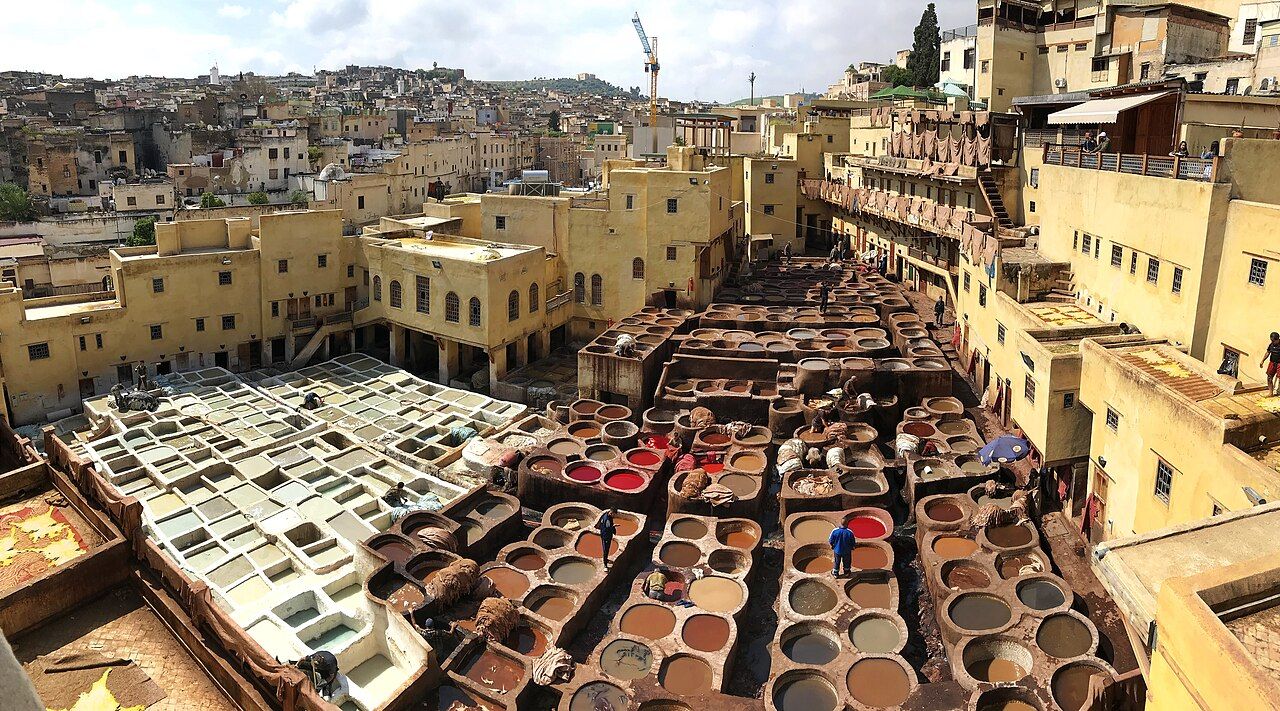
From the terrace the pits look like a painter's palette, but every colour is the result of heavy work done by hand and foot. Take time to watch the rhythm of it: hides lifted and dropped, carried between pits, laid out on the roofs.
From the terrace the pits look like a painter's palette, but every colour is the result of heavy work done by hand and foot.
Buying leather fairly, or not at all
Leather is one of the great crafts of Fès, and buying a piece made here can be a fine souvenir. But there is no obligation, and a few principles help:
- Look before you buy. Check stitching, lining and the smell of the leather. Well-tanned leather should not smell strongly once finished.
- Bargain politely. Prices are not fixed. Start well below the asking price and settle somewhere you are both happy with. Walking away is acceptable.
- Do not feel cornered. Shops at the tannery can be persuasive. If you are not interested, thank the staff, leave a small tip if they took you up, and leave.
- Compare. Leather goods are sold all over the medina, and you may find similar pieces elsewhere with less pressure.
Prices change and vary greatly, so we do not give figures here. What matters is that you pay what feels fair for what you are buying, and that you leave on good terms.
Around the tannery
Chouara is a short walk from Place Seffarine, where coppersmiths hammer trays and cauldrons in the open air. The dyers' lane, where skeins of wool and fabric hang to dry, is also close by; see the dyers' street and the looms. Together they make a morning devoted to the working crafts of the medina.
For a very different perspective, the hills above Fès, around the Merinid tombs, look down over the whole old city. From there the tannery disappears into a sea of rooftops, and you realise how much of the medina's life happens hidden from view.