
Finding your way in Fès el-Bali
The old medina has thousands of lanes and almost no straight lines. A few simple rules, and a willingness to wander, turn that maze into one of the best walks in Morocco.
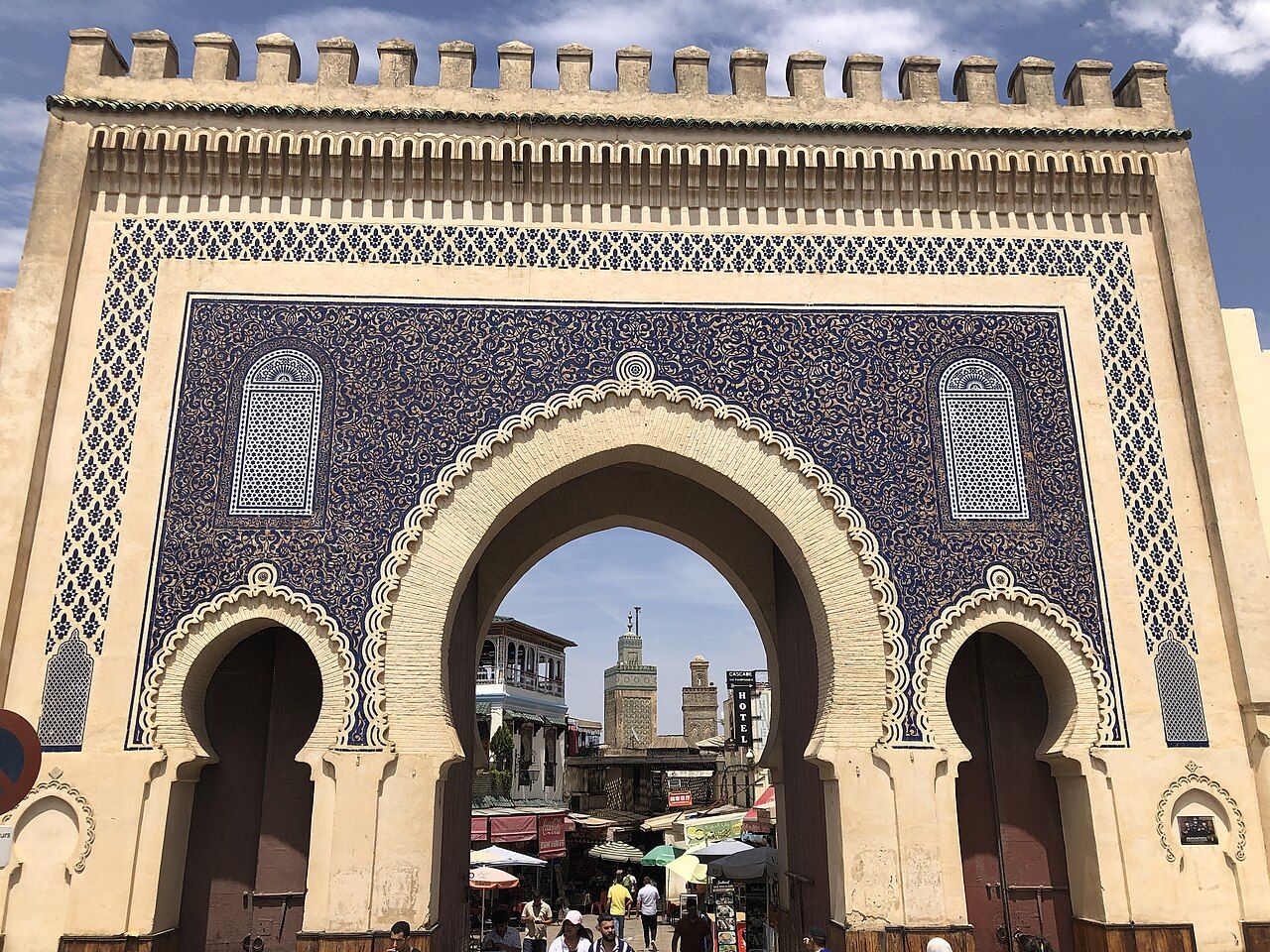
- From Bab Bou JeloudStarts at the gate itself
- PaceHalf day
- The way inEnter through Bab Bou Jeloud
- BringOffline map, water, patience, a polite refusal
Fès el-Bali is famous for being hard to navigate, and the reputation is earned. The old city is a dense web of lanes, passages and dead ends packed into a valley, with thousands of alleys and very few views out. Yet people have been finding their way around it for well over a thousand years. Most of what you need is a handful of landmarks, a feel for the slope, and the confidence to ask.
Learn the shape of the valley
The single most useful fact about the medina is that it slopes. The western edge, around the blue gate of Bab Bou Jeloud, sits high. From there the city falls steadily towards the river that runs through its middle, and towards the great mosque of al-Qarawiyyin near the bottom. East of the river the ground rises again into the Andalusian quarter.
That gives you a rough compass that works even when you cannot see the sky. Walking downhill usually takes you towards the centre, the spice market, the mosque and the craft quarters. Walking uphill usually takes you back towards Bab Bou Jeloud and the edge of the old city. When in doubt, follow the gradient.
The two spines
Two long streets run from the top of the medina towards its centre: Talaa Kebira and Talaa Seghira. Both start just inside Bab Bou Jeloud and wind downhill, more or less in parallel, before meeting again near the al-Attarine madrasa and the old spice market. They are the medina's spines, and many of its sights lie along them or a short way off.
If you stay on either one, you will not get seriously lost. They are busy, lined with shops and food stalls, and wide enough for loaded donkeys and mules to pass. The trouble starts, pleasantly, when you step off them into the side lanes. Make a note of where you left the main street, and you can usually retrace your steps.
Signs, landmarks and the people around you
In recent years the city has marked several heritage walking routes through the medina, with coloured signs and plaques on walls at junctions. Each route follows a theme or a quarter. They are not complete and some signs fade or go missing, but where you see them they help, and they tend to lead past the sights rather than into dead ends.
Beyond the signs, use what the city gives you:
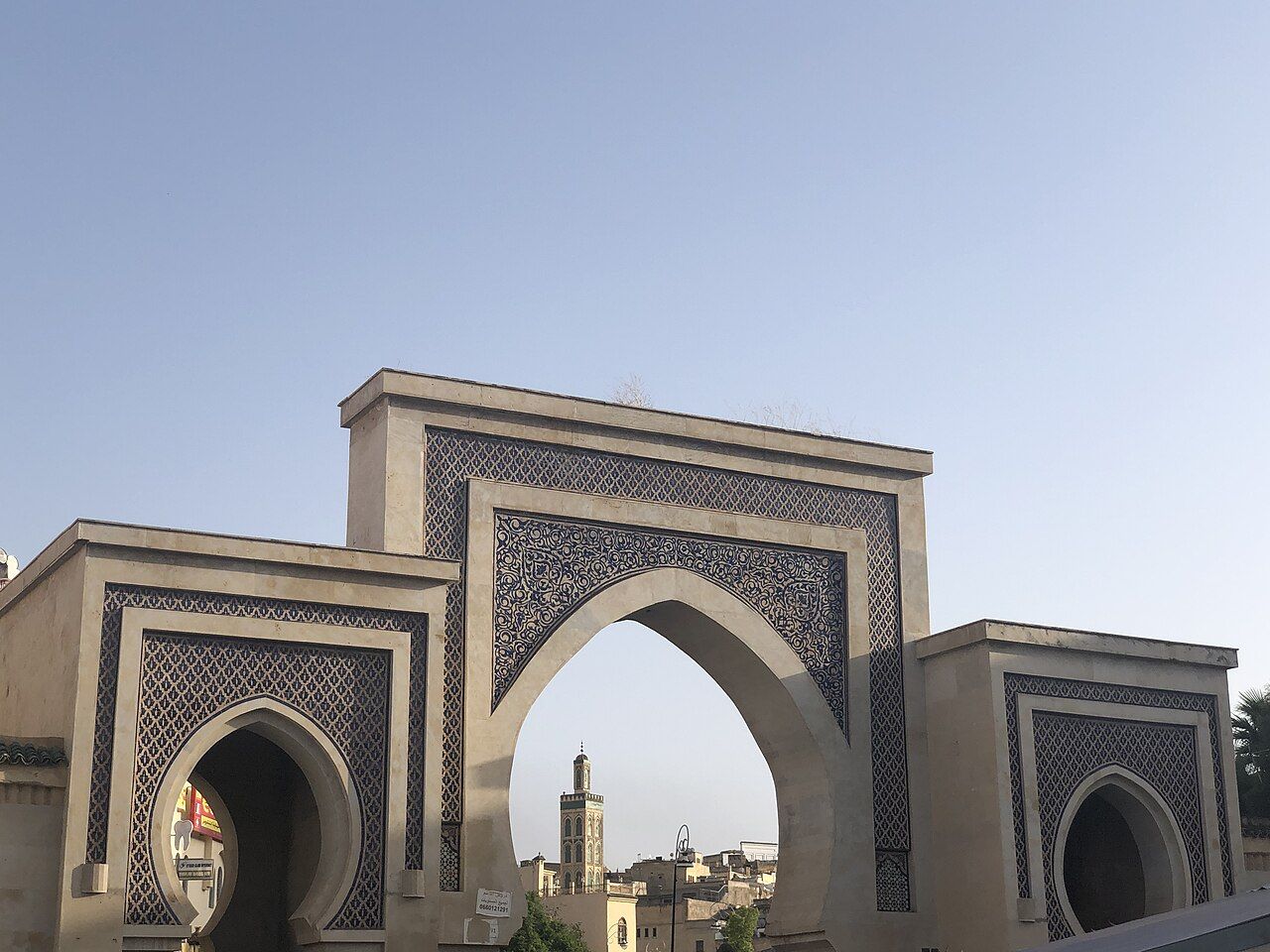
- Gates. The medina's gates are fixed points. Bab Bou Jeloud on the west, Bab Guissa to the north, Bab Ftouh in the south-east. If you reach one, you know where you are.
- Squares. Small open places such as the tiled fountain at Nejjarine or the coppersmiths' square at Seffarine are easy to recognise and easy to ask for.
- Minarets. When a lane opens up, a minaret glimpsed above the rooftops can give you a bearing, although many look alike at first.
- Shopkeepers. People running a shop are usually happy to point you towards a well-known place. Ask for a landmark, not an address.
Phone maps help on the main streets, but the lanes are narrow, the signal comes and goes, and positioning drifts between high walls. Download a map in advance and treat it as a rough guide rather than a precise one.
Get lost on purpose
Some of the best of Fès lies off the main routes. Side lanes, called derbs, lead to quiet residential corners, neighbourhood bread ovens, small mosques and fountains, and doors carved with patterns you will not see on the busy streets. Many derbs are dead ends. That is part of how the city works: a lane serves a cluster of houses, and the houses turn their backs to the street.
Give yourself an hour with no destination. Pick a direction, notice the turns you take, and allow yourself to backtrack. If a lane narrows and the shops stop, you are probably heading into a residential pocket, and it may end at a door. Turn around without fuss. Residents are used to lost visitors, but remember that these are people's homes: keep your voice down and your camera lowered.
Close by: Nejjarine square, fountain and woodwork
Unofficial guides and polite refusals
Sooner or later someone will offer to show you the way. Some are simply helpful. Others are unofficial guides hoping for a fee or a commission from the shops they lead you to. A few use familiar lines: the road ahead is closed, the place you want is shut today, the tannery is only open now, follow me.
None of this is dangerous, but it can be tiring. A calm approach works best:
- Say "no, thank you" clearly and keep walking. In Arabic, "la, shukran" is understood everywhere.
- If you are told a street is closed, carry on and see for yourself. Usually it is not.
- If you accept help with directions, be clear about it at the start and expect to offer a small tip.
- Head for a busy main street or a shop if someone persists. Persistence tends to fade in a crowd.
If you would like a guide, licensed guides can be arranged through official tourism channels, and they carry identification. For the busiest sights, such as the terraces above the Chouara tannery, knowing the area in advance means you can decide calmly where you want to go.
Habits that help in the lanes
- Listen for "balak". It means "watch out", and you will hear it from porters, cart pushers and muleteers coming through. Step to the side and let them pass.
- Start early. The lanes are quieter in the first hours of the day, and it is easier to read the layout when they are not packed.
- Mind the hours. Many shops close around Friday midday prayers, and shuttered lanes can look unfamiliar. During Ramadan the daytime rhythm changes too.
- Carry water and small change. Walking the medina is slow and often uphill on the way back.
- Know your exit. Before you set off, decide which gate you will aim for if you tire. A petit taxi can take you on from any of the main gates.
The medina rewards anyone who stops worrying about the map. Once you have the slope, the two main streets and a few landmarks in your head, wander towards places like the doorways of al-Qarawiyyin and let the lanes in between do the rest.