
Nejjarine square, fountain and woodwork
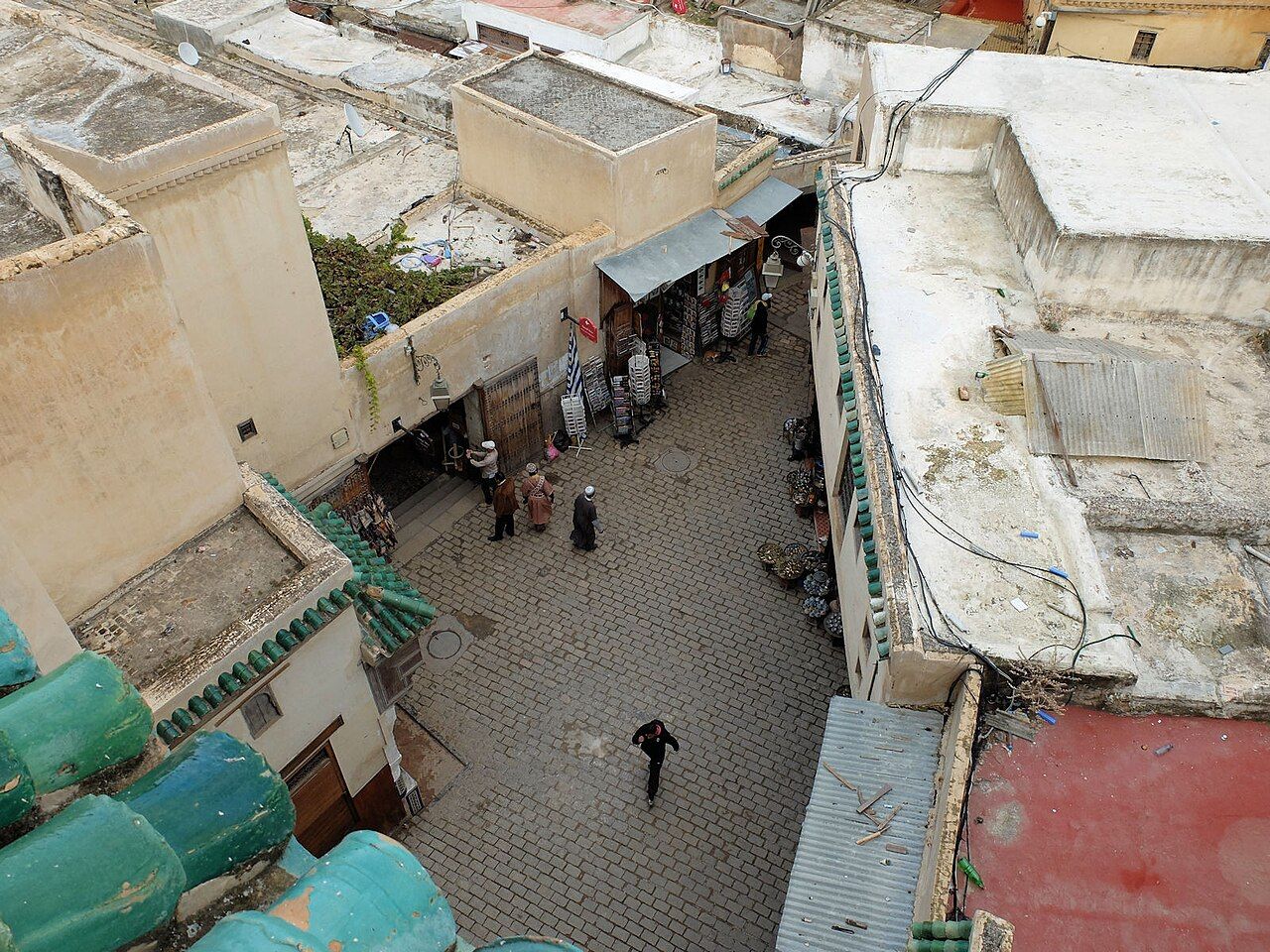
A small square in the heart of the medina gathers three things Fès does best: a tiled fountain, a restored merchants' inn, and lanes full of carpenters at work.
- From Bab Bou JeloudAbout twenty-five minutes downhill on foot
- PaceEasy
- The way inOff Talaa Kebira, near the spice market
- BringSmall change, a curious nose, modest clothing
Follow your nose in the middle of the medina and you may find yourself at Place Nejjarine. The smell of cedar shavings drifts from the lanes of the carpenters, and the little square they surround holds one of the best-known fountains in Fès and a museum devoted to wood. It is a small place, but it ties together much of what makes the city's craft tradition so distinctive.
A square named for carpenters
"Nejjarine" means carpenters, and woodworkers have occupied this quarter for centuries. The square is not large: a sloping open space paved in stone, hemmed in by walls, shopfronts and doorways. Lanes lead off in several directions, and the busiest of them are still lined with workshops where men saw, carve and assemble.
The square lies close to the meeting of the medina's two main streets, and a short walk from the spice market and the great mosque. It is an easy landmark to aim for, and a good place to pause and get your bearings on a long walk downhill.
The Nejjarine fountain
On one side of the square stands a public fountain, set into the wall and framed by an arch. It is one of the finest of its kind in the city. The basin sits under a panel of zellige mosaic in dense geometric patterns, surrounded by carved plaster, and above it a carved cedar canopy throws out a deep wooden overhang supported on brackets.
Public fountains were essential to the medina for centuries, supplying water to households that lacked their own source, and Fès has hundreds of them. Many were endowed as acts of charity. The one at Nejjarine, generally dated to the eighteenth century, shows how such a practical structure could become a showpiece of three crafts at once: tile, plaster and wood. Look at how each material is placed: tile where water splashes, plaster above, wood under the protective eaves.
The old merchants' inn
Beside the fountain rises a tall building with a grand carved doorway. This is a funduq, a merchants' inn, built in the early eighteenth century. Inns like this were the commercial infrastructure of the old city. Travelling traders kept their animals and goods on the ground floor, around a central courtyard, and slept or stored merchandise in rooms on the floors above.
Fès had many funduqs, and some are still in use as workshops and storerooms. This one fell into disrepair and was restored at the end of the twentieth century, then opened as a museum dedicated to the art of wood. The restoration itself is part of the exhibit: the courtyard, galleries, balustrades and ceilings are all carved and painted cedar.
Close by: Place Seffarine and the coppersmiths
Inside the museum of wood
The galleries on the upper floors show woodwork from across Morocco and from different periods. Expect to see:
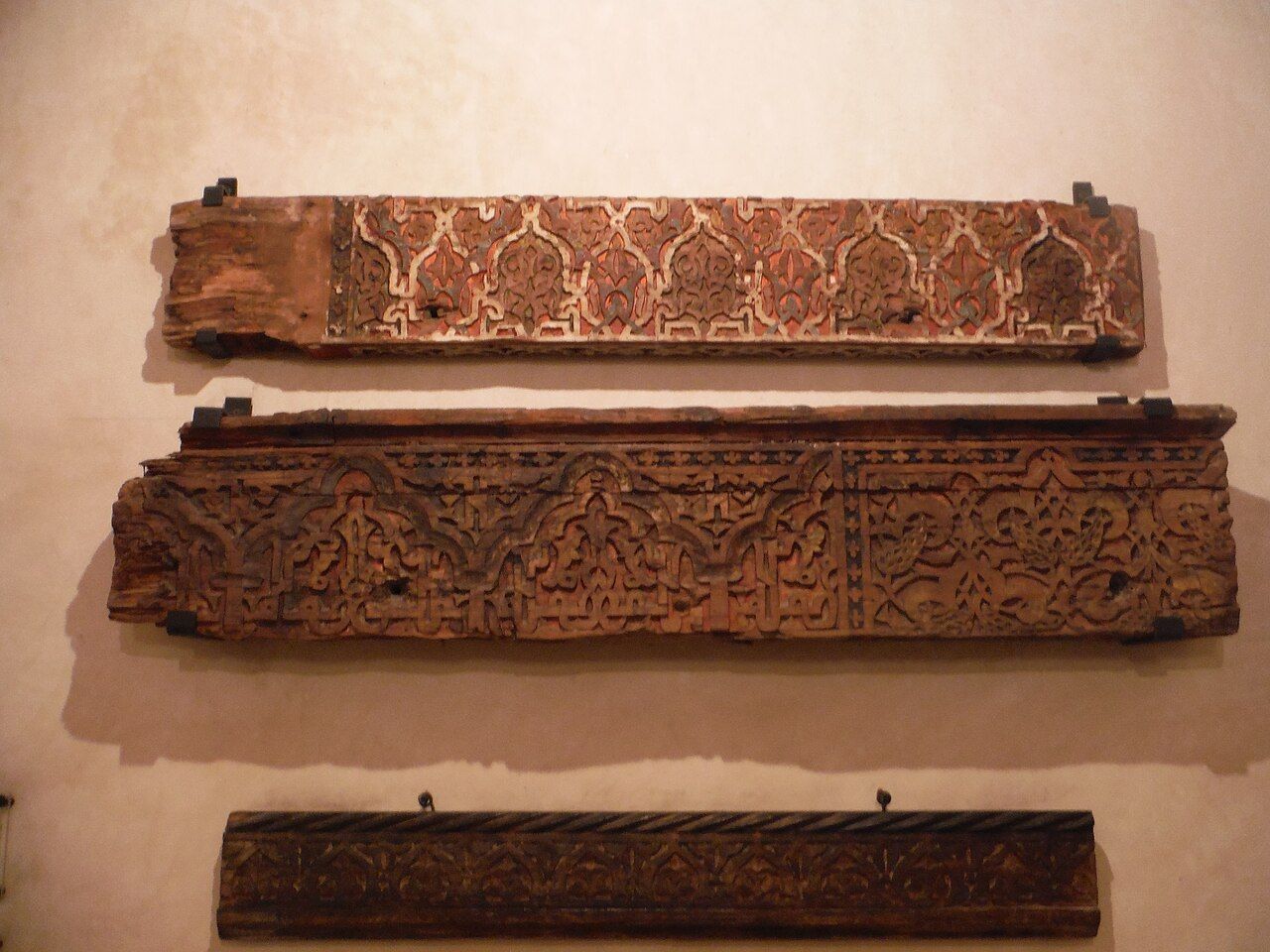
- Architectural pieces. Carved beams, lintels, brackets and ceiling panels rescued from old buildings, some still bearing traces of paint.
- Doors and screens. Panels of turned or interlaced wood, and doors with geometric patterns built up from many small pieces.
- Tools of the trade. The planes, chisels, saws and measuring instruments carpenters used, along with explanations of techniques.
- Everyday objects. Chests, musical instruments and household items, showing how wood ran through daily life.
The beams are especially worth time. Seen up close, at eye level, they reveal the same patterns you strain to see in the dark eaves of a madrasa courtyard such as al-Attarine. Here you can study the carving, the inscriptions and the way the wood was cut and joined.
The museum's roof terrace looks over the square and across the rooftops of the medina, with green-tiled roofs and minarets in view. It is one of the easier rooftop views to reach in the old city. The museum charges a fee and keeps set hours, and photography rules inside have varied.
Cedar and the carpenters' lanes
Cedar is the defining wood of Fès. It comes from the forests of the Middle Atlas, south of the city, and it has long been prized for its durability, resistance to insects, warm colour and scent. Cedar beams carry the weight of houses and madrasas; cedar panels make doors, ceilings and screens. Fès carpenters also work with other woods, including walnut and thuya, but cedar is the one you smell.
The lanes around the square are where that smell comes from. In small open-fronted workshops, you can watch furniture, doors, boxes and ceiling elements being made. Some carpenters still turn wood on simple lathes; others carve by hand with chisels and mallets. Wedding chairs and decorated platforms are among the more surprising things you may see under construction.
Watching is generally fine, but be considerate: these are working spaces, and the craftsmen are paid by what they produce, not by visitors. Ask before you photograph anyone, keep out of the way of saws and lathes, and be ready to move on.
Fitting Nejjarine into your day
- Combine it with the madrasas. Nejjarine is a short walk from al-Attarine and from the doors of the great mosque, and makes a natural pause between them.
- Come during working hours. The carpenters' lanes are quiet early in the morning and on Fridays. Mid-morning to late afternoon is the best time to see them busy.
- Use the square as a landmark. If you get lost, asking for Nejjarine usually brings a clear answer. See our guide to finding your way for more.
- Look for the same crafts at home. The carved cedar here is the same material that frames courtyards in the city's old courtyard houses.
Nejjarine is small enough to see in an hour, but it is the kind of place you may come back to. The fountain catches the light differently through the day, and the lanes around it are never quite the same twice.