
The Merinid tombs at sunset
On the bare hill north of the medina, broken royal tombs and an old fortress look down on the whole of Fès el-Bali. Arrive before dusk and stay for the calls to prayer.
- From Bab Bou JeloudPetit taxi, or a steep climb
- PaceEasy
- The way inPetit taxi up, or steep walk
- BringLayer for the wind, water, torch for the descent
From inside the medina, Fès is a maze. From the hill to its north, it becomes a single shape: a bowl of white and sand-coloured houses poured into a valley, punctured by minarets and the green-tiled roofs of mosques and shrines. The ruined Merinid tombs on that hill are the classic place to see it, and the hour before sunset is the classic time.
The ruins on the hill
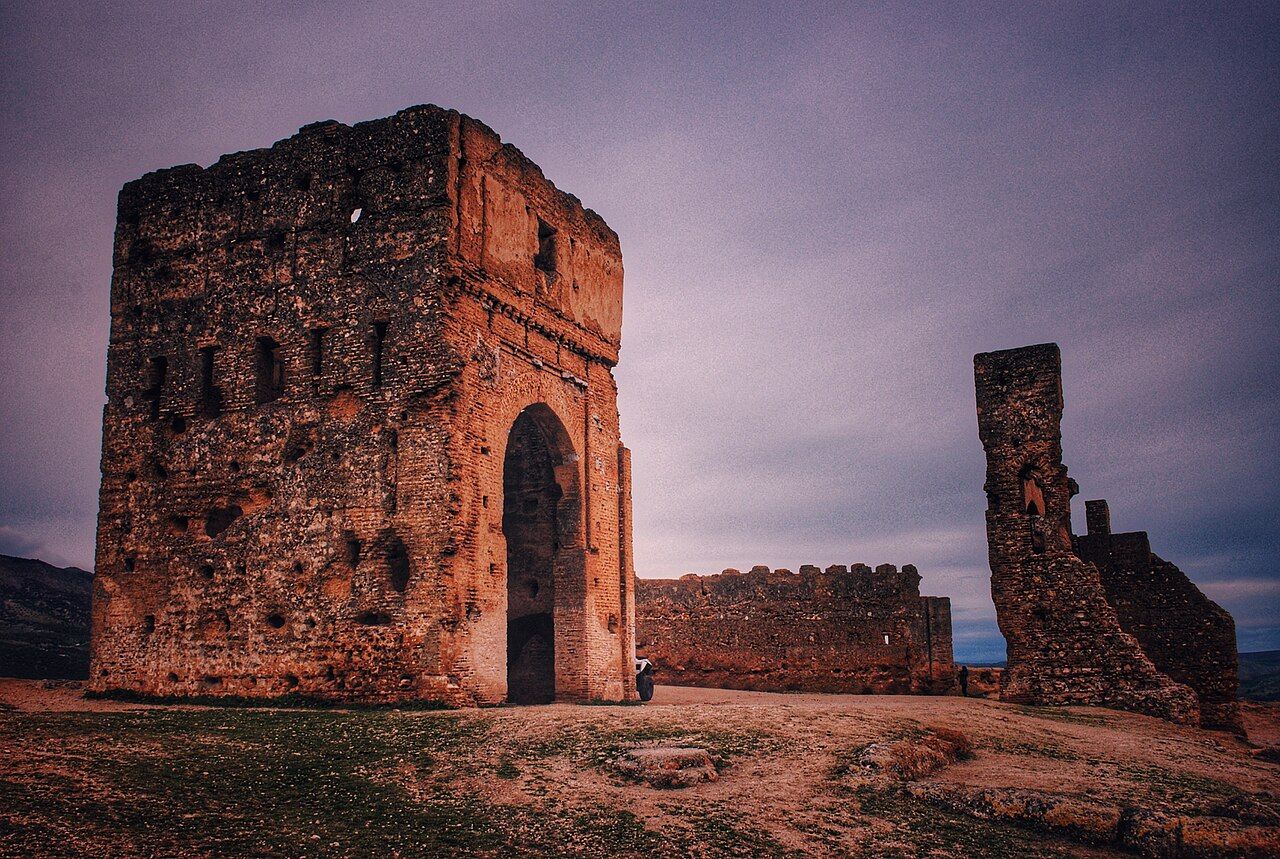
The tombs date from the Marinid period, when the dynasty ruled from Fès between the thirteenth and fifteenth centuries. They are thought to have formed a royal burial ground on the hill above the city, though who exactly lay here is not clearly known. Today what survives are a few large square structures of rubble and brick, roofless and broken, standing among low ruined walls on bare, scrubby ground.
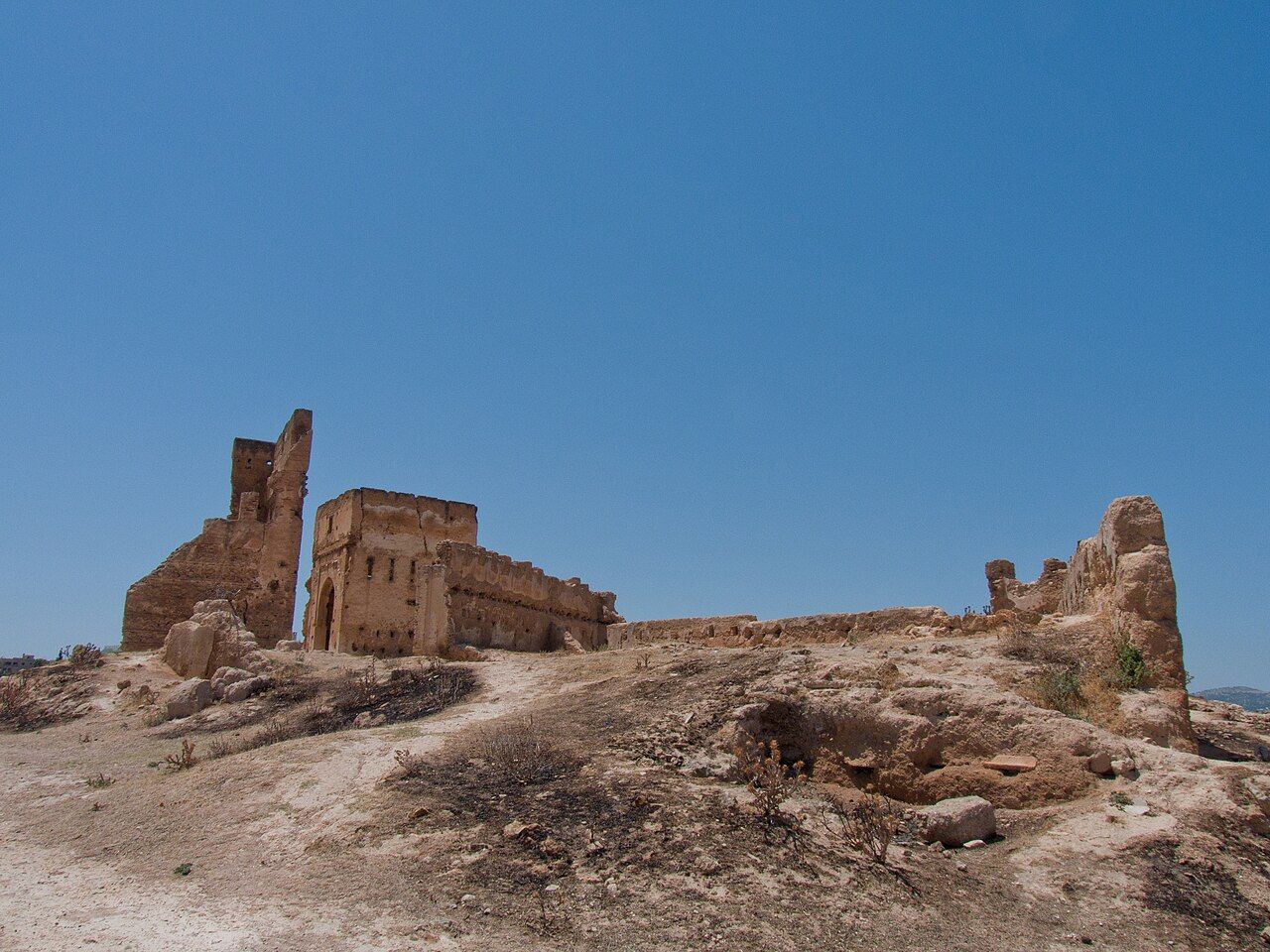
Look closely and you can still see traces of the decoration that once covered them: patches of carved plaster, the outline of arches, holes where beams once sat. Most of the finery is gone, and the bare masonry has turned a warm orange in the weather. They are best enjoyed as dramatic ruins rather than as a lesson in Marinid art, which you will find in much better shape in the Bou Inania madrasa below.
Borj Nord and the arms museum
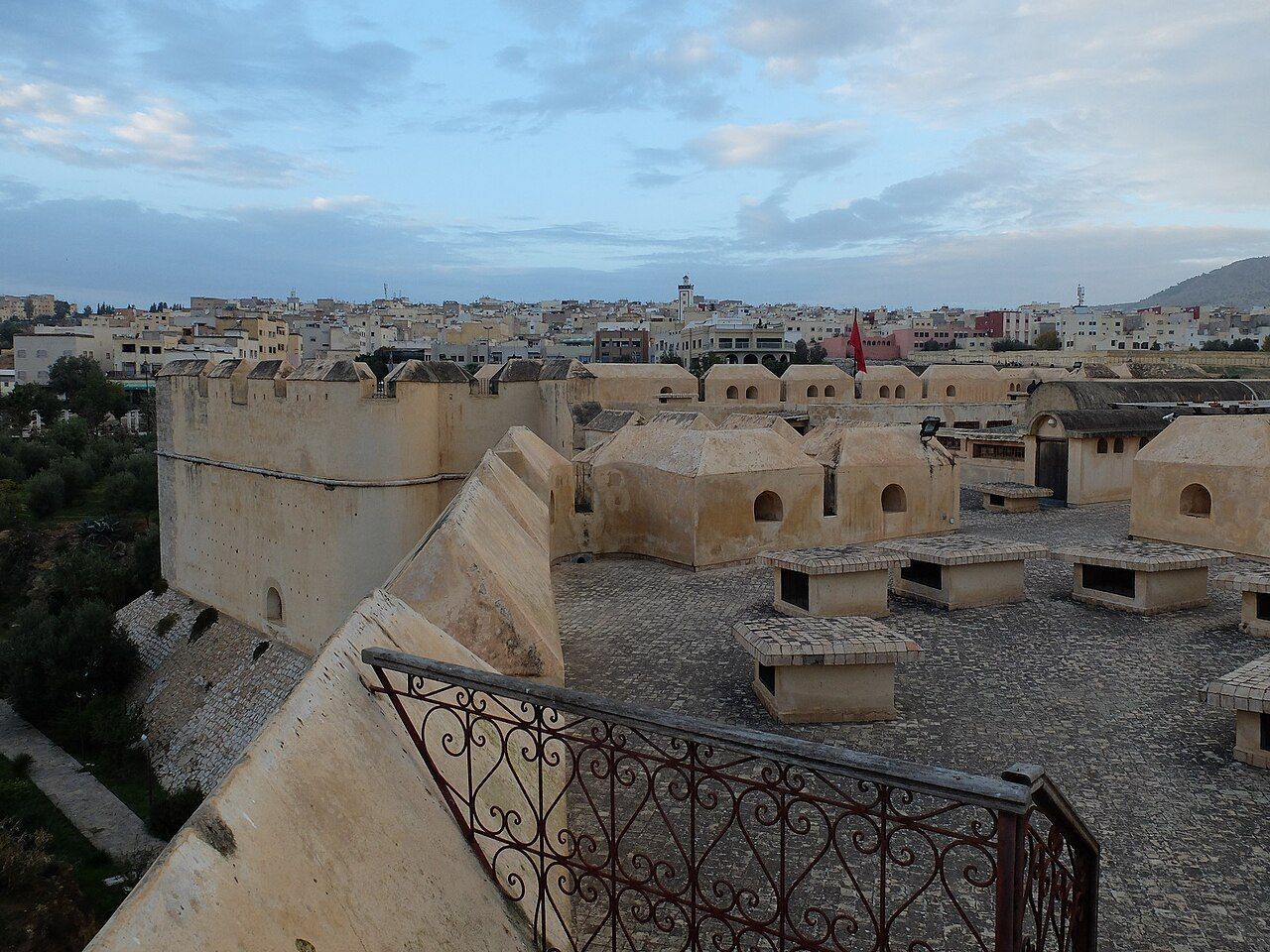
A short walk along the hill brings you to Borj Nord, a fortress built in the late sixteenth century under the Saadian dynasty. Its twin, Borj Sud, faces it across the valley on the opposite hill. The forts were built to watch the city as much as to defend it, which tells you something about relations between rulers and the people of Fès at the time.
Borj Nord holds a museum of arms, with a large collection of weapons from Morocco and many other countries, from old swords and daggers to rifles and cannons. The building has been renovated, and its roof gives another view over the medina. It is usually easier to visit earlier in the afternoon and then walk on to the tombs for sunset.
The view at dusk
Close by: The Chouara tannery from above
Arrive an hour or so before sunset. The light falls across the medina from the west and picks out details you can never see from inside it: the green-tiled roofs of the great mosques, minarets marking each neighbourhood, the green hills beyond, the patchwork of roof terraces where washing hangs. With binoculars or a long lens you can trace the line of the main streets as they drop towards the river.
Then wait for the calls to prayer. As the sun goes down, the call for the sunset prayer starts from one minaret and is taken up by dozens of others across the valley, each slightly out of time with the next. The sound rises from the bowl of the city and overlaps until it fills the air, then fades one voice at a time. Sitting on a ruin above it, many visitors find this the moment that stays with them longest from Fès. If you want to understand what those minarets belong to, read about al-Qarawiyyin from its doorways.
Getting up there
The tombs stand above the northern edge of Fès el-Bali. There are two ways up:
- By petit taxi. The easiest. Ask for the Merinid tombs; a road runs along the top of the hill and drops you close by. For the return after dark, either ask the driver to come back at an agreed time or walk to the road to find another taxi.
- On foot. From inside the medina, paths climb out through a northern gate and up the hillside. The climb is steep, rough and mostly unshaded, and the paths are not well marked. It is easier going up in daylight than coming down at dusk.
From Bab Bou Jeloud, the taxi ride takes a few minutes, depending on traffic.
Staying safe and comfortable
The hill is an open public space, popular with local families, couples and young people at sunset, and most evenings it is relaxed. Still, it is a bare hillside on the edge of the city, and a few sensible habits help:
- Go with someone if you can, and leave as the light fades rather than lingering long after dark.
- Carry a small torch or use your phone's light; the ground is uneven and littered with stones.
- Keep valuables out of sight.
- Expect offers of guided walks back into the medina. A polite refusal is enough.
- Bring a layer. Even on warm days the wind on top cools quickly after sunset.
Best seasons
Autumn, winter and spring give the clearest air and the most comfortable climb. On winter evenings the sunset comes early, so plan around it. In summer the heat in the afternoon is intense and the hill offers almost no shade, so go late and bring water. After rain the air is often very clear and the view sharp all the way to the mountains.
Sunset times shift by well over an hour between winter and summer, so in any season check the time of sunset the day before, and allow for the taxi ride and a few minutes of walking across rough ground so you are settled before the light turns.
Few places explain Fès as quickly as this hill. After a day of lanes, turns and dead ends, seeing the whole city at once, and hearing it call out at dusk, brings the pieces together.