
The neighbourhood hammam
Every quarter of old Fès has its steam bath. Here is how a local hammam works, what to bring, and how to behave so the visit is as relaxing for others as for you.
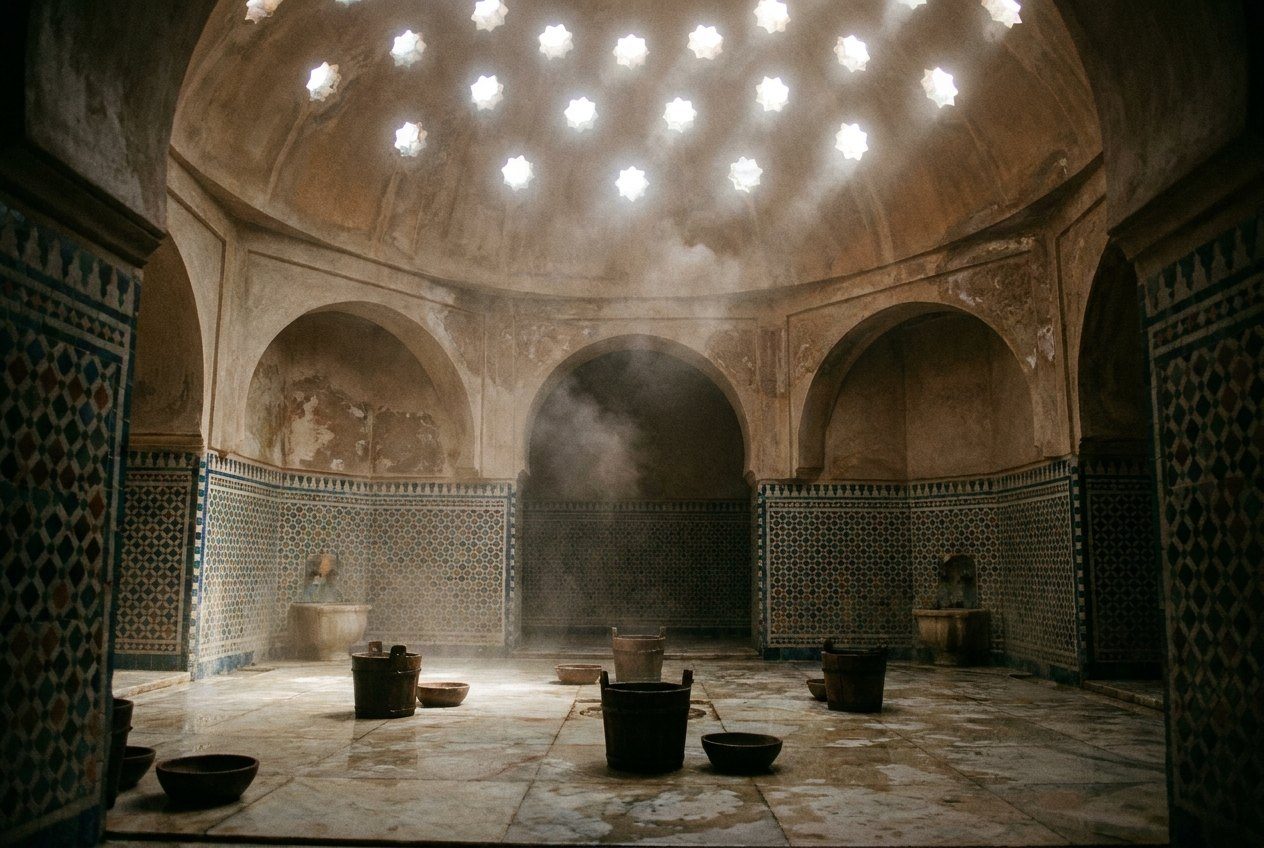
- From Bab Bou JeloudOne in almost every neighbourhood
- PaceEasy
- The way inAsk locally for the quarter's bath
- BringTowel, flip-flops, black soap, kessa glove, clean underwear
In the old city, the hammam is not a spa. It is a public steam bath where people of the quarter go each week to wash thoroughly, sweat out the dust, talk and rest. Many homes in the medina were built without full bathrooms, so the bath has long been part of the fabric of the neighbourhood, alongside the mosque, the fountain and the bread oven. Going to one as a visitor is entirely possible, and with a little preparation it can be one of the most relaxing hours of your trip.
How a bath is laid out
From the lane, a hammam often looks like nothing more than a plain door, sometimes with a painted sign. Inside, you first reach a changing room, usually a tiled hall with benches and hooks, sometimes with an attendant who keeps watch over clothes and sells soap and gloves.
Beyond that are the bathing rooms, laid out as a sequence that gets hotter as you go in. Typically there is a cool or warm room, then a hotter room, and finally the hottest room close to the furnace. The rooms have thick walls and low domed ceilings pierced with small glass openings that let in shafts of light through the steam. Floors are tiled or of stone, often heated from below. Taps or basins deliver hot and cold water, and bathers fill buckets to wash.
The furnace that heats the water has traditionally burned wood, and in some quarters it has been linked to the same fuel supply as the bread oven. Keeping these fires going is hard, skilled work. If you want to understand how the bath fits into daily life, read our piece on Fassi food and the neighbourhood oven.
Separate hours for men and women
Men and women never bathe together. Some hammams have two separate sections, one for each. Many others have a single set of rooms and alternate: women at certain hours of the day, men at others. A common pattern gives women the middle of the day and afternoon and men the early morning and evening, but this varies widely from bath to bath. Always ask at the door or ask someone in the quarter before you go in.
Women's hours are often busier and more social, with mothers, daughters and neighbours spending a long afternoon together. Men's sessions tend to be shorter.
Close by: The riad: a house turned inward
Black soap and a kessa glove
Local bathers arrive with a small kit, and you can buy most of it in the souks or at the bath itself:
- Towel and a change of clean underwear.
- Flip-flops for the wet floors.
- Black soap, savon beldi, a soft paste made from olives that you spread on wet skin.
- Kessa, a rough glove for scrubbing.
- Ghassoul, a mineral clay from the Atlas used on hair and skin, if you like.
- Shampoo, a comb, a small mat and a bag for wet things.
- Small change for the entrance, for an attendant and for any extras.
Buckets and scoops are usually provided. Leave valuables at home or with a companion outside.
The ritual, step by step
- Pay and change. Pay at the entrance and undress in the changing room. Men keep shorts or underwear on throughout; women usually keep on underwear bottoms. Watch what others do and follow.
- Warm up. Move into the warm room, fill a bucket or two, and sit on the floor or on your mat. Pour water over yourself and let the heat open your pores.
- Soap. After some minutes, spread black soap over your skin and leave it to work while you sit in the heat.
- Scrub. Rinse, then scrub firmly with the kessa. Grey rolls of dead skin come away; it looks dramatic and is perfectly normal.
- Wash and rinse. Wash your hair, rinse thoroughly with warm water, then cool down slowly with cooler water.
- Rest. Back in the changing room, sit and cool off before dressing. Drink water.
Many baths have an attendant who will scrub you for an extra charge. The scrub is vigorous, and you will be turned over and moved about like a parcel. If it is too strong, say so; a gesture is enough.
Etiquette inside
- Never take photographs or film anywhere inside the bath.
- Keep your voice moderate. The hammam is social, but not loud.
- Take care not to splash others when you pour water, and rinse your space when you leave it.
- Do not take more taps or buckets than you need when it is busy.
- Leave the bath if you feel dizzy. Heat and dehydration are real risks; drink water before and after.
- Skip the bath if you are unwell, if you have open cuts or a contagious skin condition, or if you are pregnant and unsure; ask a doctor in case of doubt.
Finding one
There are many neighbourhood hammams across Fès el-Bali and Fès el-Jdid, and most quarters still have their own. Ask the people where you are staying, or ask in a shop, which bath is closest and at what hours women or men attend. Some places tend to welcome visitors more readily than others. Prices are usually modest for the entrance, with extras for the scrub and products. Hours change around Ramadan and religious holidays.
The hammam is at its best in the cooler months, when the warmth soaks into you and the cold walk home in the lanes afterwards feels clean and bright. It is a ritual shared across Morocco and beyond, and the people of Fès keep it alive one quarter at a time. If you walk the city's lanes in the morning, as in our guide to finding your way, the bath is the right end to the day.