
Moulay Idriss Zerhoun and Sefrou
One is a holy town draped over two green hills, the other a small market town in the foothills famous for cherries. Both show a quieter side of the Fès region.
- From Bab Bou JeloudAn hour or so by road
- PaceFull day
- The way inGrand taxi or hired car from Fès
- BringModest clothing, water, small change, good shoes
Fès has many easy escapes, and these two are among the most rewarding. Moulay Idriss Zerhoun sits on the hills above the Roman ruins of Volubilis, a white town crowded around the tomb of the founder of the first Moroccan Islamic dynasty. Sefrou lies on the other side of Fès, south towards the Middle Atlas, a small walled medina by a river, with a long Jewish history and a famous cherry harvest. You can visit them on separate days or, with a car and an early start, in one long loop.
Moulay Idriss Zerhoun, the holy town
The town is named after Moulay Idriss, a descendant of the Prophet Muhammad who arrived in the region in the late eighth century, was welcomed by local Berber tribes, and founded a dynasty that shaped Morocco. Fès itself took shape under him and his son, Moulay Idriss the younger. When Moulay Idriss died, he was buried here, and his tomb became one of the most important pilgrimage places in the country.
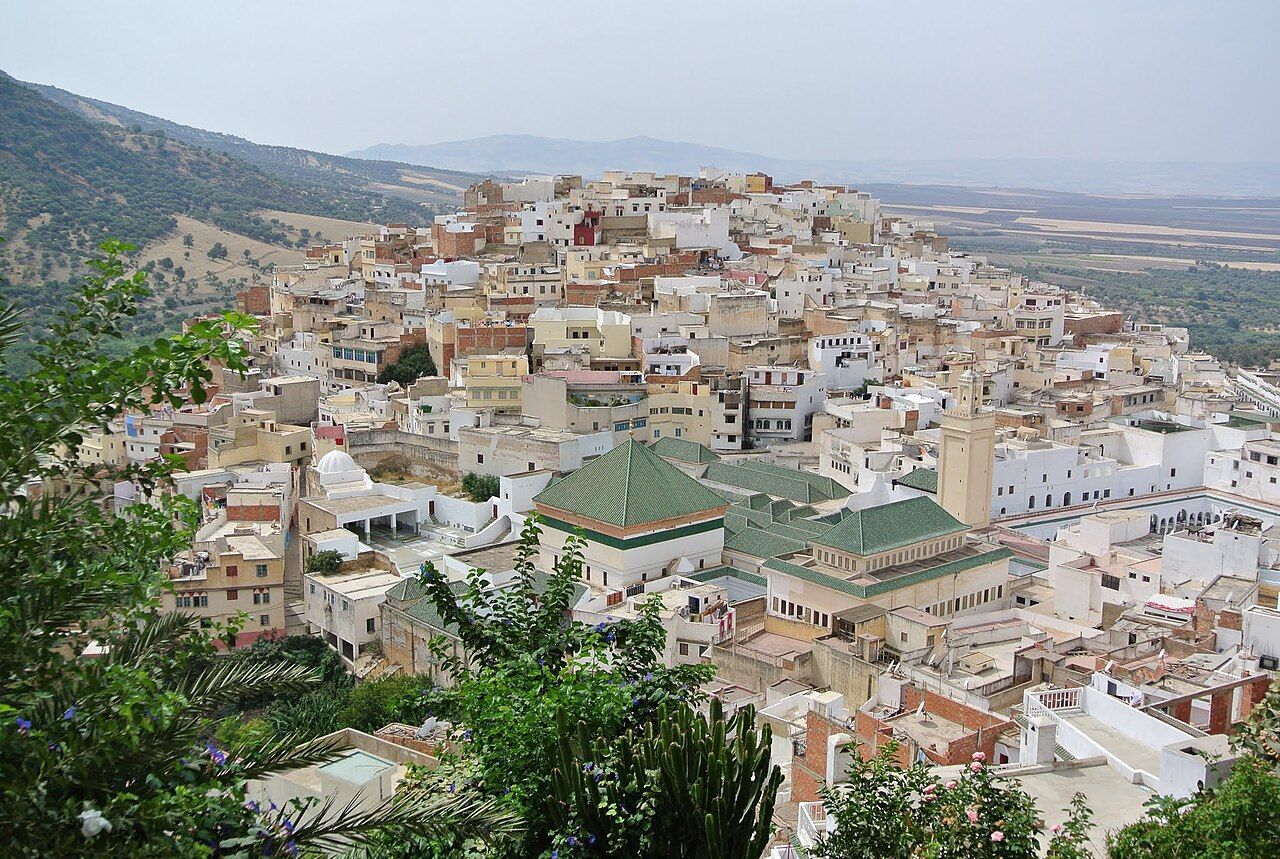
The town grew around the tomb on two hills, with houses climbing the slopes in tight terraces of white and pale ochre. The green-tiled roofs of the sanctuary sit in the dip between the hills, and from above you see how everything turns towards it.
The wooden bar at the sanctuary
The sanctuary is closed to non-Muslims, and a wooden bar across the entrance marks where visitors should stop. Look from the street, keep a respectful distance and do not photograph worshippers. Dress modestly throughout the town: shoulders and knees covered for everyone. During the annual pilgrimage season, in late summer, the town fills with pilgrims, and it is best to visit at other times unless you are going to see the event at a distance.
The view from above
The reason most travellers climb is the view. Lanes and stairs wind up from the main square to vantage points on the hills, where the whole town opens out below, with the green roofs of the sanctuary at its heart and olive groves stretching away towards Volubilis. The climb is steep but short. Locals may offer to guide you to the best viewpoints; a polite refusal or a clearly agreed arrangement is fine. Look out also for a mosque with a round minaret covered in green tile and inscriptions, rare in Morocco, where most minarets are square.
The town makes a natural pair with the Roman site below it, and our guide to Meknès and Volubilis in a day shows how to fit it into that trip.
Close by: Ifrane and the cedar forest
Sefrou, the cherry town
Sefrou lies around thirty kilometres south-east of Fès, in the foothills where the plain begins to rise towards the Middle Atlas. It is a small town with an old walled medina beside the Aggai river, gardens and orchards around it, and a calmer feel than the big imperial cities.
For centuries Sefrou had one of the largest Jewish communities in Morocco relative to its size, and it had its own mellah inside the walls. Most of that community left in the twentieth century, but the history is visible in the layout of the old quarter and in the house styles. As in Fès, treat that heritage with quiet respect; our piece on Fès el-Jdid and the Mellah gives the wider background.
Walking the old town
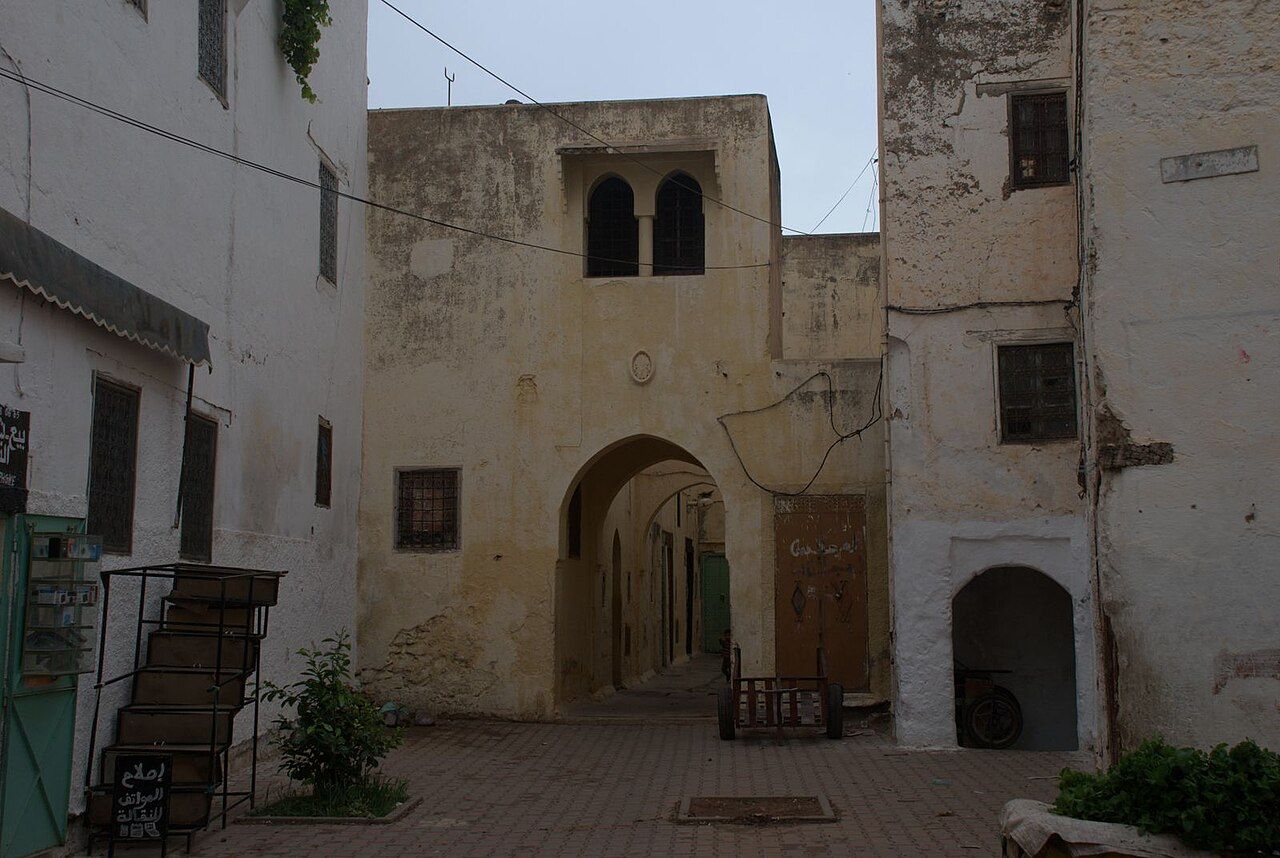
Sefrou's medina is easy to explore on foot in an hour or two. Gates lead into lanes of whitewashed and ochre houses, small squares and covered passages, with bridges over the river. Workshops and small markets line some streets, selling everyday goods rather than souvenirs. The pace is slow, and fewer visitors means fewer approaches from would-be guides, though the usual polite customs still apply.
Beyond the walls, a short walk leads out into the green valley, where paths follow the river and a waterfall can be found in the hills to the west of the town. Ask locally for the way and whether the paths are in good condition.
The cherry festival
Sefrou is famous for its cherries, grown in the orchards around the town. Each year, usually in June when the harvest comes in, the town holds a cherry festival with parades, music, folk performances and the crowning of a Cherry Queen. The festival has run for about a century and has been recognised by UNESCO as part of the world's intangible cultural heritage. The dates move from year to year.
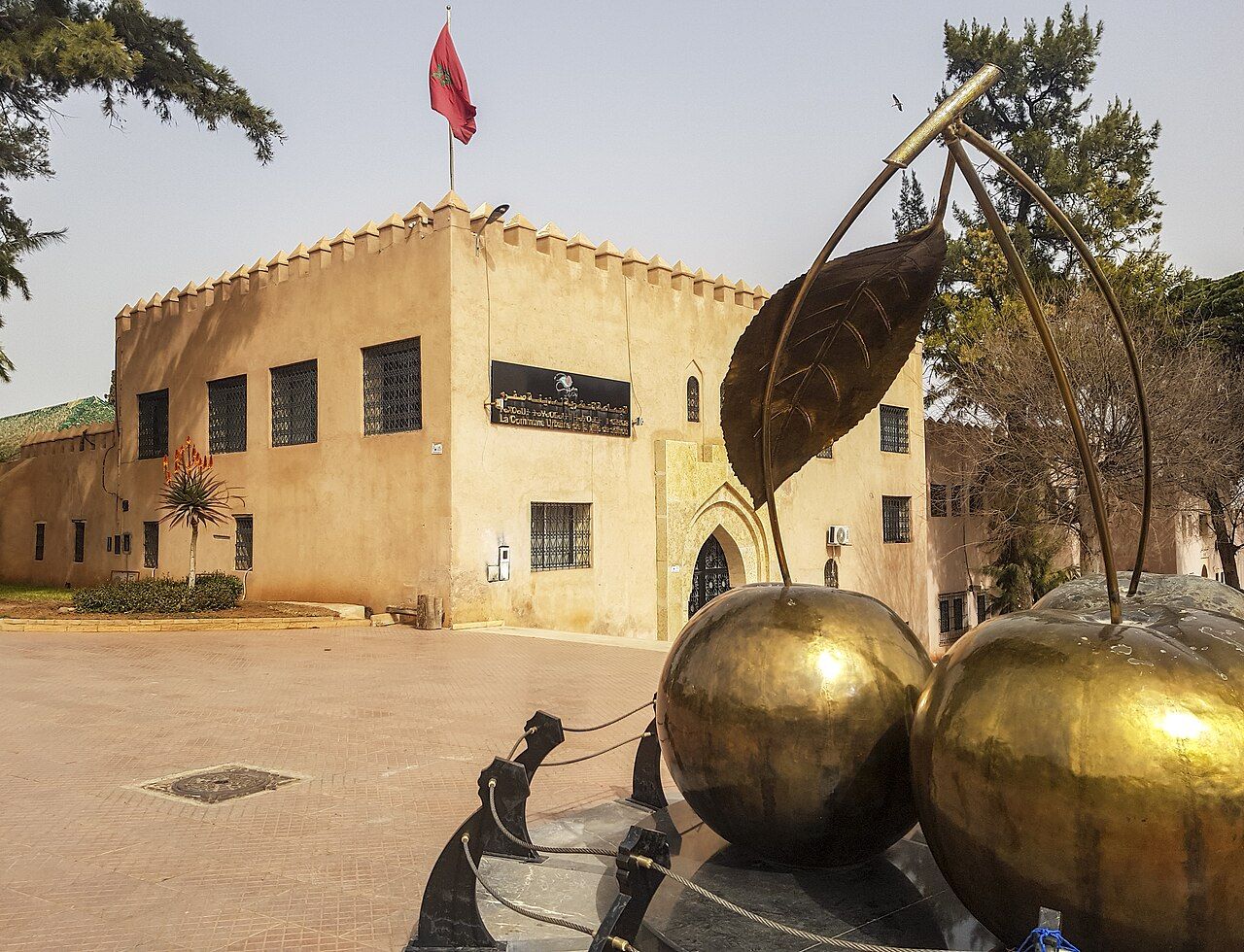
Even outside the festival, the town shows its pride in the fruit: a large sculpture of a pair of cherries stands in front of the municipal building, and in early summer cherries are piled high on market stalls.
Between Fès and Meknès
- Moulay Idriss Zerhoun. The town lies between Fès and Meknès, about an hour or more by road from Fès. Grand taxis run from Meknès, and many visitors combine it with Volubilis by hired car or with a driver.
- Sefrou. About forty minutes to an hour by road from Fès, depending on traffic. Grand taxis and buses run regularly; ask in Fès where they leave from that day.
Grand taxis are shared and leave when full, so start early and expect waits.
Green hills and June cherries
Spring and early summer are the best seasons. The hills around Moulay Idriss turn green and gold, and Sefrou's orchards are in fruit by June. Autumn is also pleasant. Summer brings strong heat, especially in the bowl of hills around the holy town, while winter can be cool and wet in the foothills.
Both towns offer something the lanes of Fès el-Bali cannot: the sense of a smaller place, closer to the land, where daily life and faith set the rhythm.