
Bissara, pastilla and the food of Fès
Fès cooks with patience and spice. Learn the city's day by its food: fava soup at dawn, bread from shared ovens, sweet-savoury pastilla and evening snail broth.
- From Bab Bou JeloudStarts right inside the gate
- PaceHalf day
- The way inOn foot through the medina
- BringSmall change, an appetite, wet wipes
Fès has long been thought of as Morocco's kitchen. Families here have cooked for sultans, scholars and merchants for centuries, and the city's food carries that history in its spice boxes and its manners. You do not need a reservation to taste it. Much of the best of Fassi cooking is eaten standing at a counter, sitting on a stool by a stall, or carried home warm in paper.
This guide follows the day from early morning to late evening, with a few notes on how to eat comfortably in the medina.
Morning: bissara and bread
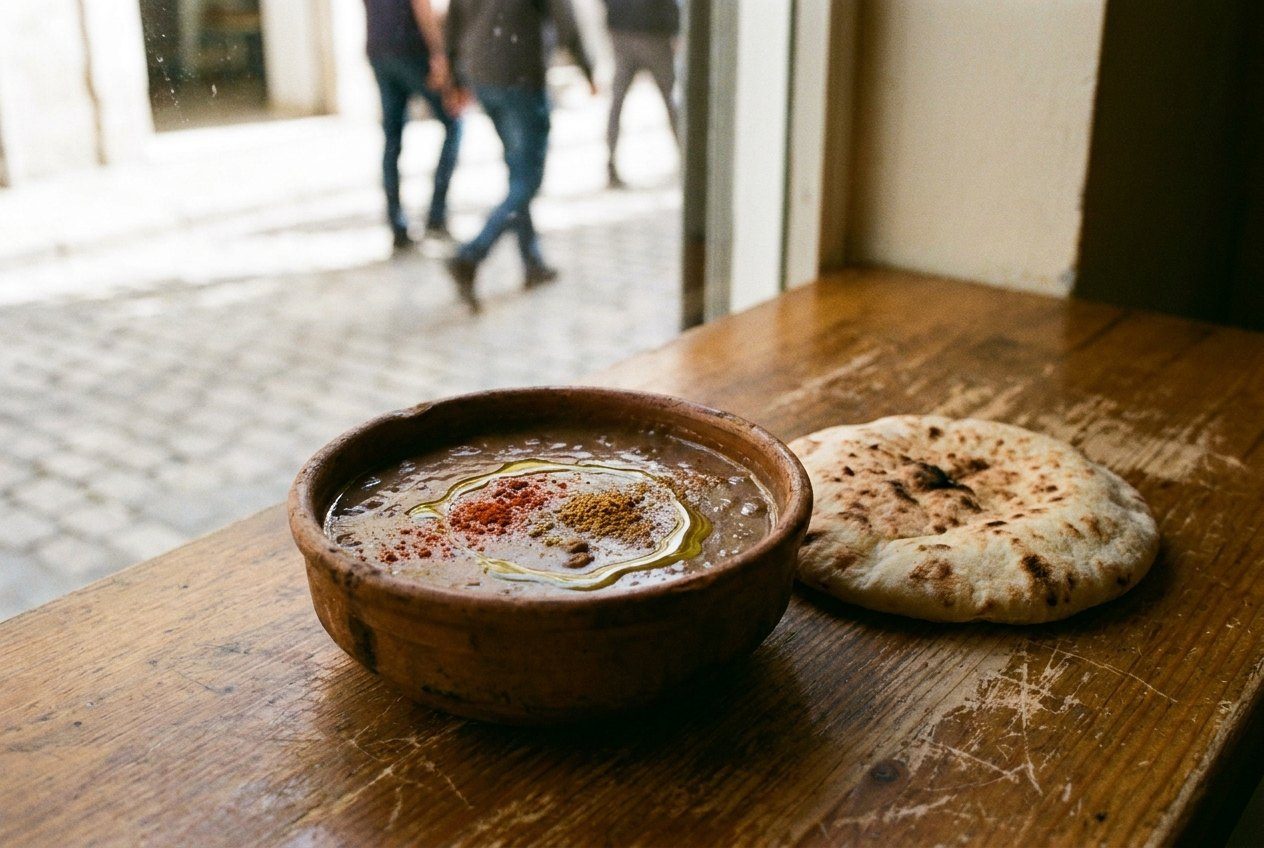
Fès wakes up on bissara. It is a thick soup of dried fava beans, peeled and cooked down with garlic until smooth, then ladled into a clay bowl and finished with a pour of olive oil, a dusting of cumin and a little paprika or chilli. You eat it with a round of bread torn into pieces and used as a spoon. It is cheap, filling and warming, and on a cold winter morning it is one of the best things in the city.
Bissara counters open early and often sell out by mid-morning. Look for a small room with a big pot on the stove and men sitting along a bench, eating in silence. Point to the pot, sit down, and someone will put a bowl in front of you.
Alongside, look for breakfast breads cooked on griddles: msemen, square layered flatbreads that are folded and pan-fried, and harcha, a slightly crumbly semolina cake. Sfenj, rings of fried yeasted dough, are sold hot from pans of oil in some lanes, threaded on a palm frond if you buy several.
The neighbourhood oven
Every quarter of the medina has a public bread oven, the ferran. Many households still knead their dough at home, shape it into flat rounds, and send it on a wooden board, often carried by a child, to be baked. The baker marks each family's loaves in his own way and returns them for a small fee. Through the low doorway you can see the long wooden paddles and the glow of the fire, and smell the bread from several turns away.
The oven is part of what holds a neighbourhood together, along with the mosque, the fountain and the hammam described in our piece on the neighbourhood bath. If a baker waves you to look in, step close to the door, ask before taking a picture, and do not get in the way of the boards coming and going.
Midday: kefta, tagines and counter meals
By late morning the smell of grilling meat starts drifting through the lanes. Kefta, minced beef or lamb mixed with onion, herbs and spices, is pressed onto skewers or shaped into patties and cooked over charcoal. You can often choose meat at a butcher's and take it next door to be grilled. It comes with bread, a little salt and cumin, and perhaps a tomato and onion salad.
Small counter kitchens near the main streets serve tagines from big clay pots: chicken with preserved lemon and olives, beef with prunes, kefta in a tomato sauce with eggs cracked on top, vegetables in a saffron broth. Look for places busy with local workers at lunchtime; a crowd is the best sign that the food is good and freshly made.
Fès also has khlii, strips of beef dried in the sun, spiced, then preserved in fat. It is used to flavour eggs and stews and appears for breakfast in some families. You may see it in jars or large tubs at stalls around the food lanes.
Close by: Place Seffarine and the coppersmiths
Pastilla, the city's festive dish
If one dish belongs to Fès, it is pastilla. In its classic form it is a large round pie of very thin pastry, folded around layers of shredded pigeon or chicken cooked with onions, saffron and herbs, scrambled eggs set in the cooking juices, and fried almonds crushed with sugar and cinnamon. The top is dusted with icing sugar and cinnamon in a lattice pattern. Sweet and savoury at once, it is served at weddings, holidays and family celebrations.
Making it properly takes many hours, so the full version is usually eaten at home or ordered in for a party. Smaller pastilla, sometimes filled with chicken or with seafood, are sold in pastry shops and at food stalls, and these are the easiest way to try it. Eat it warm, carefully, because the sugar on top flies.
Evening: snail broth and grilled snacks
As the light goes, carts appear at corners selling bowls of snails cooked in a dark broth flavoured with a mix of herbs and spices, often including thyme, liquorice, aniseed and mint among many others. People eat the snails with a toothpick and then drink the broth, which is said to be good for digestion and for colds. A small bowl is a cheap and warming end to a walk.
Other evening stalls sell grilled sardines in some areas, fried fish, boiled chickpeas with cumin, and sandwiches of grilled liver or kefta. Around the gates, including the square at Bab Bou Jeloud, the evening food scene is busy and easy to dip into.
Ramadan sweets
During Ramadan the city's rhythm changes. Most food stalls close during daylight hours, and the medina grows busy in the late afternoon as people shop for the evening meal that breaks the fast. Pastry stalls pile up chebakia, flower-shaped pieces of dough fried, soaked in honey and covered with sesame seeds, and briouats, small pastries filled with almond paste. Sellou, a rich mix of toasted flour, ground almonds and sesame, is sold by weight. At sunset, harira soup, dates and boiled eggs come to the table.
If you travel during the month, eat discreetly in public during the day, and expect hours to change everywhere, including at many places described in our guide to finding your way in the medina. The evening atmosphere, though, is something special: the lanes come alive as the call to prayer ends the fast and the city sits down to eat at once.
Eating comfortably in the medina
- Eat where locals eat, and where food is cooked fresh in front of you.
- Use your right hand for bread and eating from shared dishes.
- Carry small change; counters seldom deal in large notes.
- Prices at stalls are usually set and modest. Ask before you order if nothing is shown.
- Bottled water is easy to find. Many visitors avoid uncooked salads for the first days.
- Mint tea is offered everywhere, sweet by default. Ask for less sugar if you prefer.
Follow your nose, sit where you can see the cook, and let Fès feed you the way it feeds itself.