
Meknès and Volubilis in a day
An hour west of Fès lie a sultan's imperial city and a Roman town on a hillside of olives. Both are UNESCO sites, and they fit into one full, rewarding day.
- From Bab Bou JeloudPetit taxi to the station, then train
- PaceFull day
- The way inTrain to Meknès, then taxi or car
- BringSun hat, water, sturdy shoes, camera
Meknès and Volubilis tell two different stories, separated by about fifteen centuries. One is the capital that the Alaouite sultan Moulay Ismail built in the late seventeenth and early eighteenth centuries, with gates, walls and granaries on a heroic scale. The other is a Roman provincial city on the slopes of the Zerhoun hills, with columns, arches and mosaic floors still in place. Both are UNESCO World Heritage Sites, and the pair makes one of the best day trips from Fès.
Grand taxi or hired car
There are two common ways to do it:
- Train and taxi. Trains run between Fès and Meknès several times a day, and the journey is usually around an hour, depending on the service. From Meknès, grand taxis run to the town of Moulay Idriss, close to Volubilis, or you can hire a taxi for the half-day loop.
- Hired car with driver, or self-drive. Easier for fitting in both sites and the town of Moulay Idriss Zerhoun. The drive from Fès to Meknès takes roughly an hour, and Volubilis lies around thirty kilometres north of Meknès.
Either way, start early. Volubilis has little shade, and you will want to see it before the midday heat in warmer months. A common order is Volubilis in the morning, lunch nearby, then Meknès in the afternoon.
Volubilis, the Roman city
Volubilis grew from an older Mauretanian settlement into an important Roman town in the province of Mauretania Tingitana, set on fertile land producing olive oil and grain. It flourished in the second and third centuries, and was later occupied by other communities long after Roman rule ended here. Earthquakes and the removal of stone for building elsewhere, including Meknès, damaged it, but much survives.
The site spreads across a gentle slope with views over the plain. Walk up the long main street, the decumanus maximus, lined with the foundations of large houses. At the top stands a triumphal arch raised in honour of the emperor Caracalla, and nearby are the columns of the basilica and the capitol, the city's public heart. Storks often nest on the high stones.
The mosaics are the highlight. Many of the larger houses still have their floors in place, open to the sky, with scenes from mythology: Orpheus with his lyre, the labours of Hercules, Dionysus and the seasons, bathing nymphs, sea creatures. Some are roped off for protection, so view them from the paths and never step onto them. Their colours are richest after rain or in soft light.
Bring water, a hat and good shoes. A small museum and visitor facilities stand at the entrance, but services change, and the fee and opening hours should be checked locally.
Close by: Moulay Idriss Zerhoun and Sefrou
Meknès, the sultan's city
Meknès was chosen by Moulay Ismail as his capital, and he poured enormous resources into it: miles of walls, palaces, gardens, stables and granaries. Much of it is ruined or rebuilt now, but the scale still impresses. The old medina is smaller and more relaxed than that of Fès, and it is easy to walk.
Bab Mansour
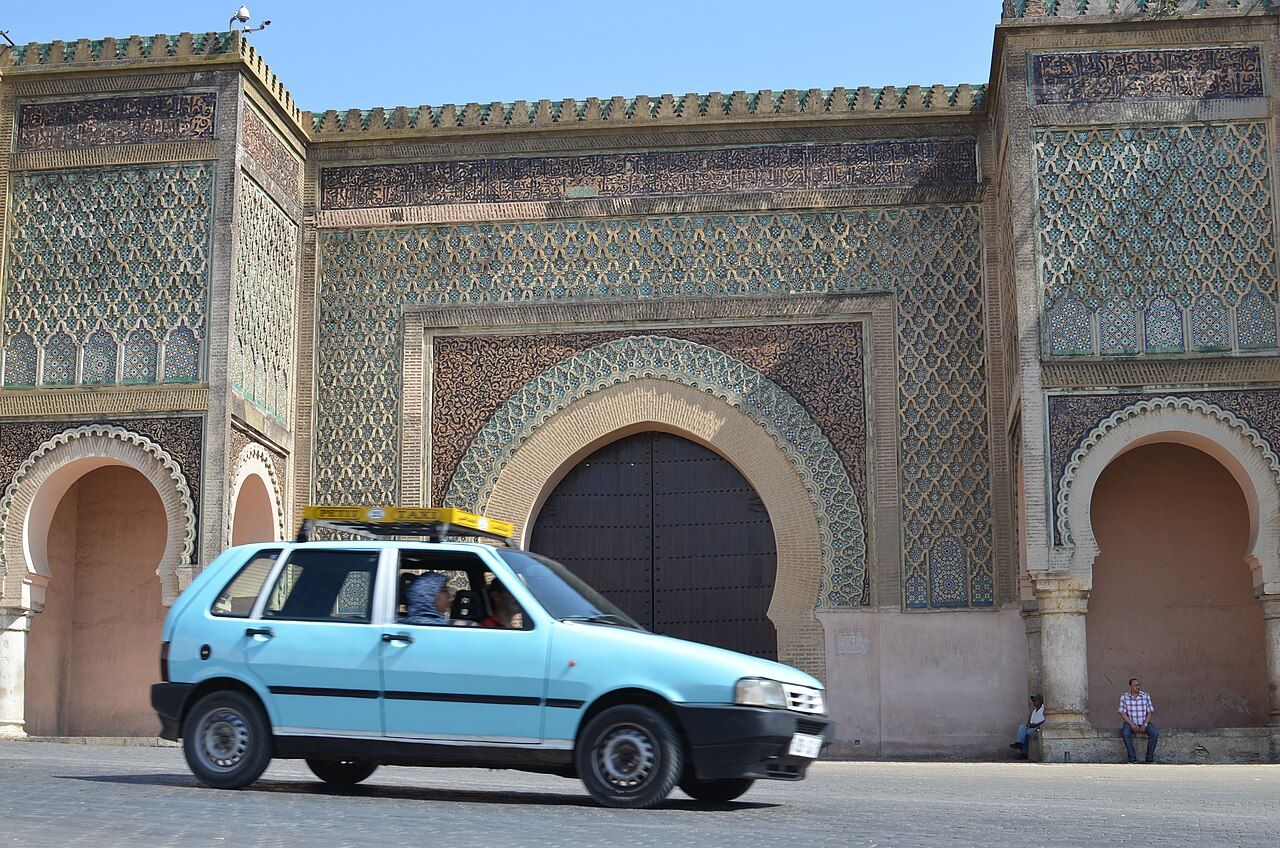
The great gate of Bab Mansour faces Place el-Hedim, the main square between the medina and the imperial city. It was completed in the early eighteenth century, after Moulay Ismail's death, and is one of the finest gates in Morocco. Its surface is covered in green and blue tile mosaic worked into a dense net pattern, framed by bands of inscription, with marble columns on the side bastions. The gate has been restored in recent years and looks freshly vivid.
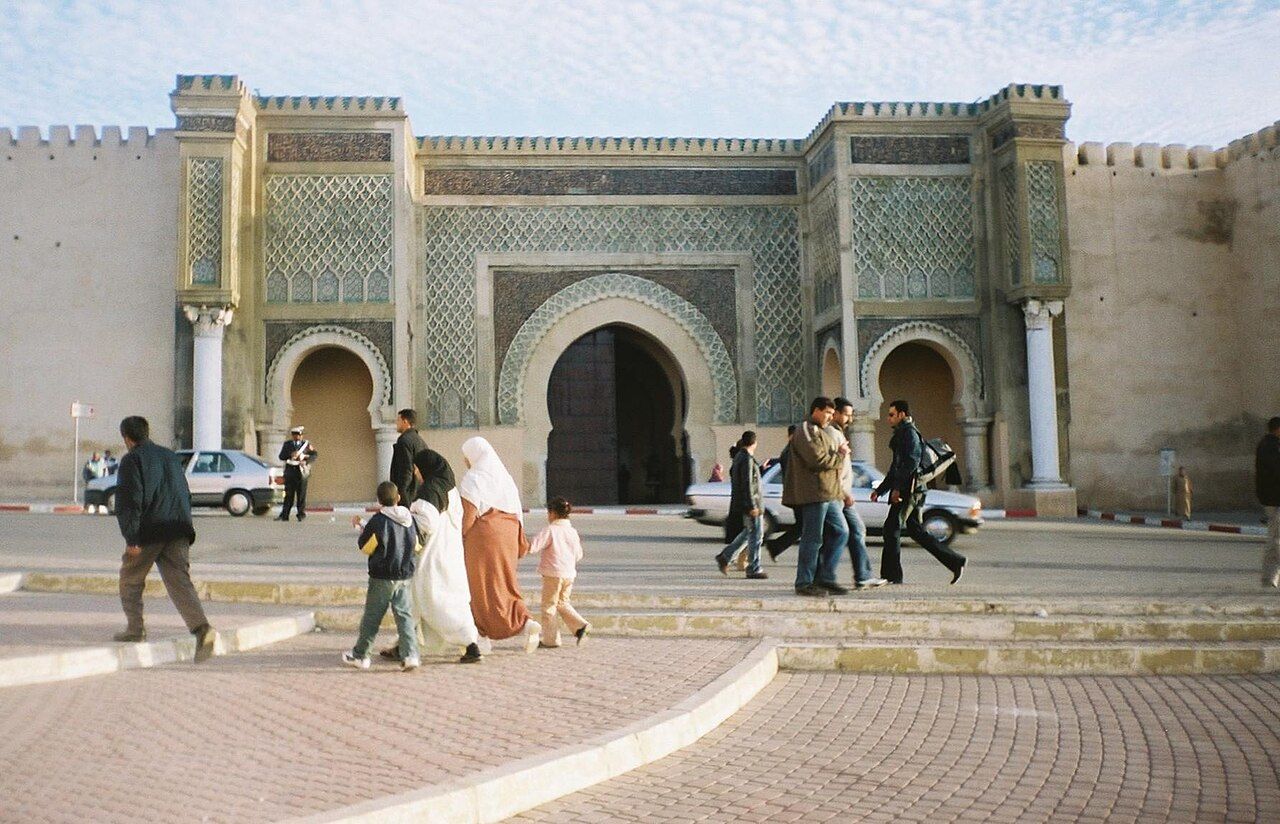
Seen side by side with the palace gates in Fès, it shows how the same crafts, tile and stone and carving, were used for very different effects two centuries apart.
Heri es-Souani
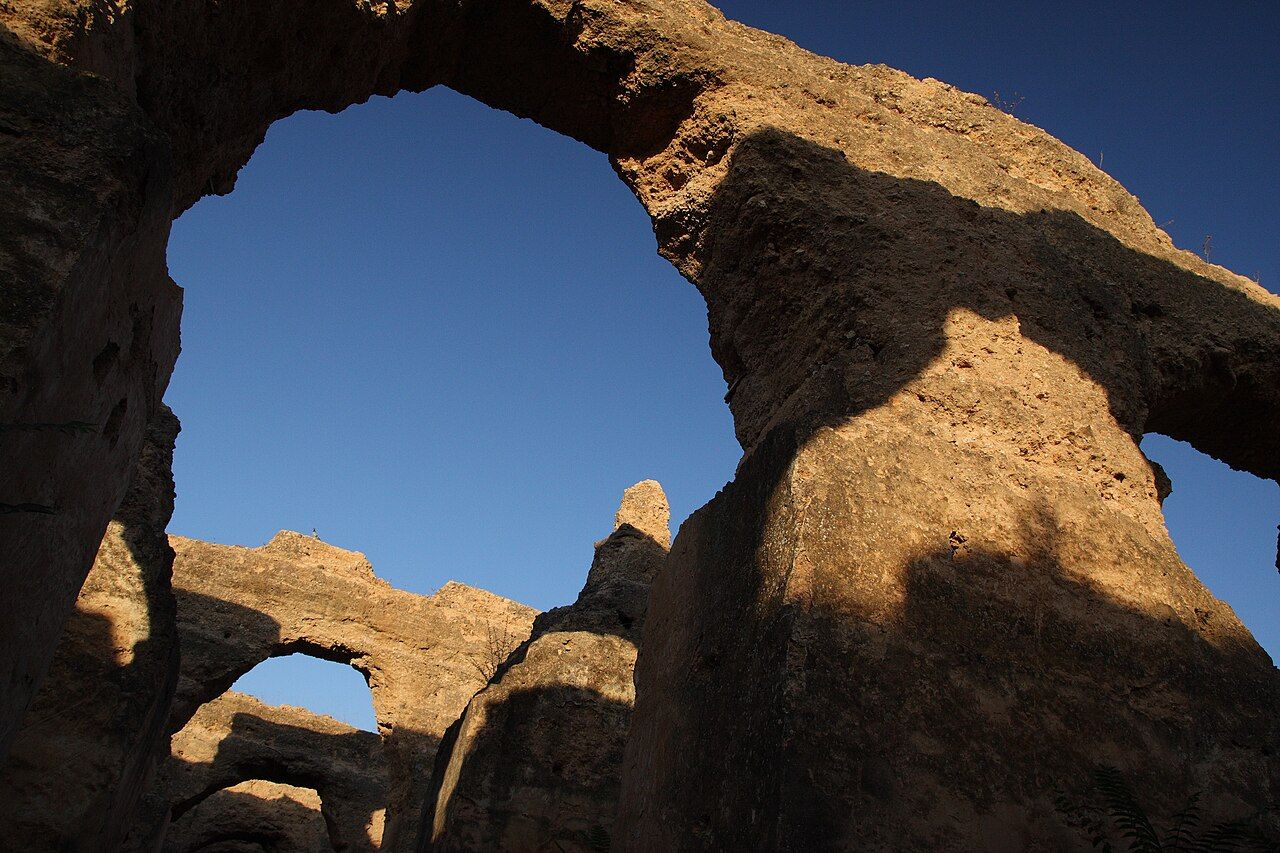
South of the gate lie the vast granaries and stables of Heri es-Souani, built to store food for the city and feed the sultan's horses. The storerooms are huge vaulted halls with thick walls that kept grain cool, and next to them stand the ruins of the stables, where rows of arches now open to the sky. Walking through them, you get a sense of how a sultan prepared a city to withstand siege.
Nearby is the Agdal basin, a large reservoir that once supplied water to the gardens and granaries. The mausoleum of Moulay Ismail is close to Bab Mansour and has at times been open to non-Muslim visitors, though it has also closed for long restoration; ask on the day.
A sample itinerary
- Early train or drive from Fès to Meknès; then on to Volubilis.
- Two hours on the Roman site, mosaics first.
- A short detour to the hill town of Moulay Idriss Zerhoun for the view.
- Lunch in Meknès; afternoon at Heri es-Souani and Bab Mansour.
- Late afternoon on Place el-Hedim, then return to Fès.
The hill town just above the ruins deserves its own visit. Read about Moulay Idriss Zerhoun and Sefrou for that.
Heat on the Volubilis mosaics
- Spring is the best season, with green fields and wildflowers around Volubilis. Summer is very hot; go early.
- Dress modestly in Meknès; the Roman site is more relaxed but sun protection matters.
- Offers of guiding are common at both sites. Official guides exist; agree any arrangement clearly before you start.
- Return trains from Meknès can fill up late in the day. Check the times in the morning.
It is a long day, but by evening you will have walked through a Roman street and a sultan's granary, and that is quite a range for one trip out of the gate at Bab Bou Jeloud.