
Riads, gardens and Fès el-Jdid
The brass gates of the Royal Palace
The palace itself stays shut, but its gilded doors on Place des Alaouites are a lesson in Moroccan craft, best seen slowly from the square and in changing light.
- From Bab Bou JeloudHalf an hour on foot, or taxi
- PaceEasy
- The way inPetit taxi or walk through Fès el-Jdid
- BringCamera, sunglasses, patience with the square's barriers
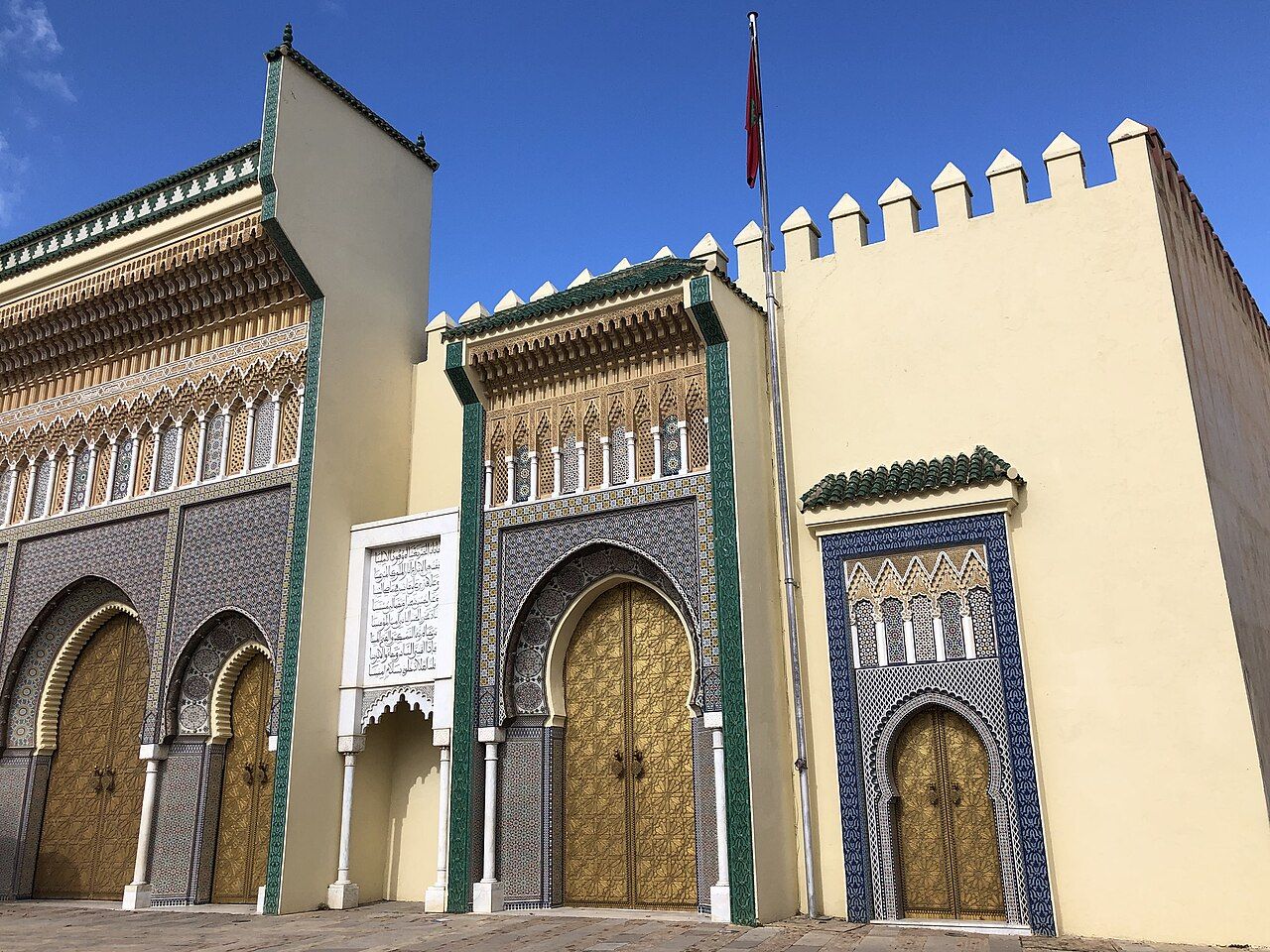
The Royal Palace of Fès is not open to visitors, and almost nothing of it can be seen from outside apart from walls. One stretch of those walls is the exception. On Place des Alaouites, at the edge of Fès el-Jdid, the palace presents a row of monumental gates with doors of polished brass set inside frames of zellige and carved cedar. They are among the most photographed sights in the city, and with good reason.
Dar al-Makhzen
The palace, Dar al-Makhzen, has stood in Fès el-Jdid since the Marinids made the new town their seat in the late thirteenth century. It has been rebuilt and extended many times since, and its grounds are enormous, taking in courtyards, gardens, pavilions and a mosque behind high walls. The palace remains in use by the royal family when they are in the city, which is why it stays closed.
The gates you see today are relatively recent. The great façade on Place des Alaouites was created in the twentieth century, using traditional techniques and the skills of Moroccan craftsmen. That makes it less an ancient monument than a showcase of living craft, made to the standards of centuries-old work.
Reading the gates
Stand back first. The façade is built as a series of arched gateways of different sizes, with the largest at the centre and smaller ones to either side. Each opening is a horseshoe arch, and each arch holds a pair of tall doors covered in brass worked into geometric patterns. In sunshine they glow gold; on a grey day they turn darker and more bronze.
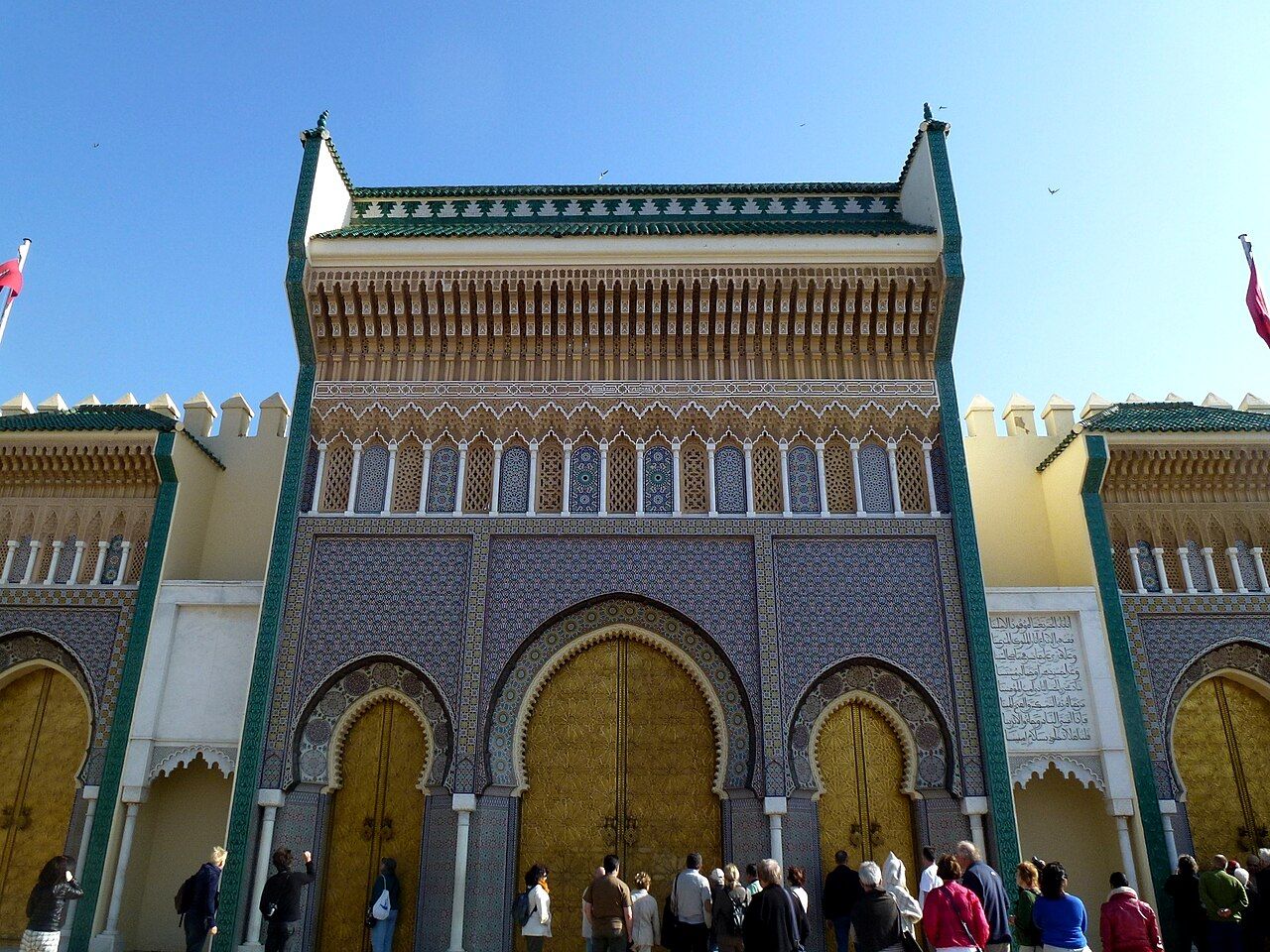
Then look at the frames. Panels of zellige surround the arches, made from small hand-cut pieces of glazed tile fitted into star and interlace patterns in blue, green and white. Above them runs a band of carved plaster and then deep eaves of carved cedar, shaded and honey-coloured. The whole thing is capped by green glazed roof tiles. Each material is a separate trade in Fès, and the gate puts them together in one frame. If you want to see how the tile is made, read about pottery and zellige in Fès.
The doors are commonly described as seven, a number that carries meaning in Moroccan tradition, though counting depends on where you stand and which openings you include. Look also for the inscription panels in carved stucco on the piers, and for the slender columns that frame the smaller entrances.
The square
Close by: The Merinid tombs at sunset
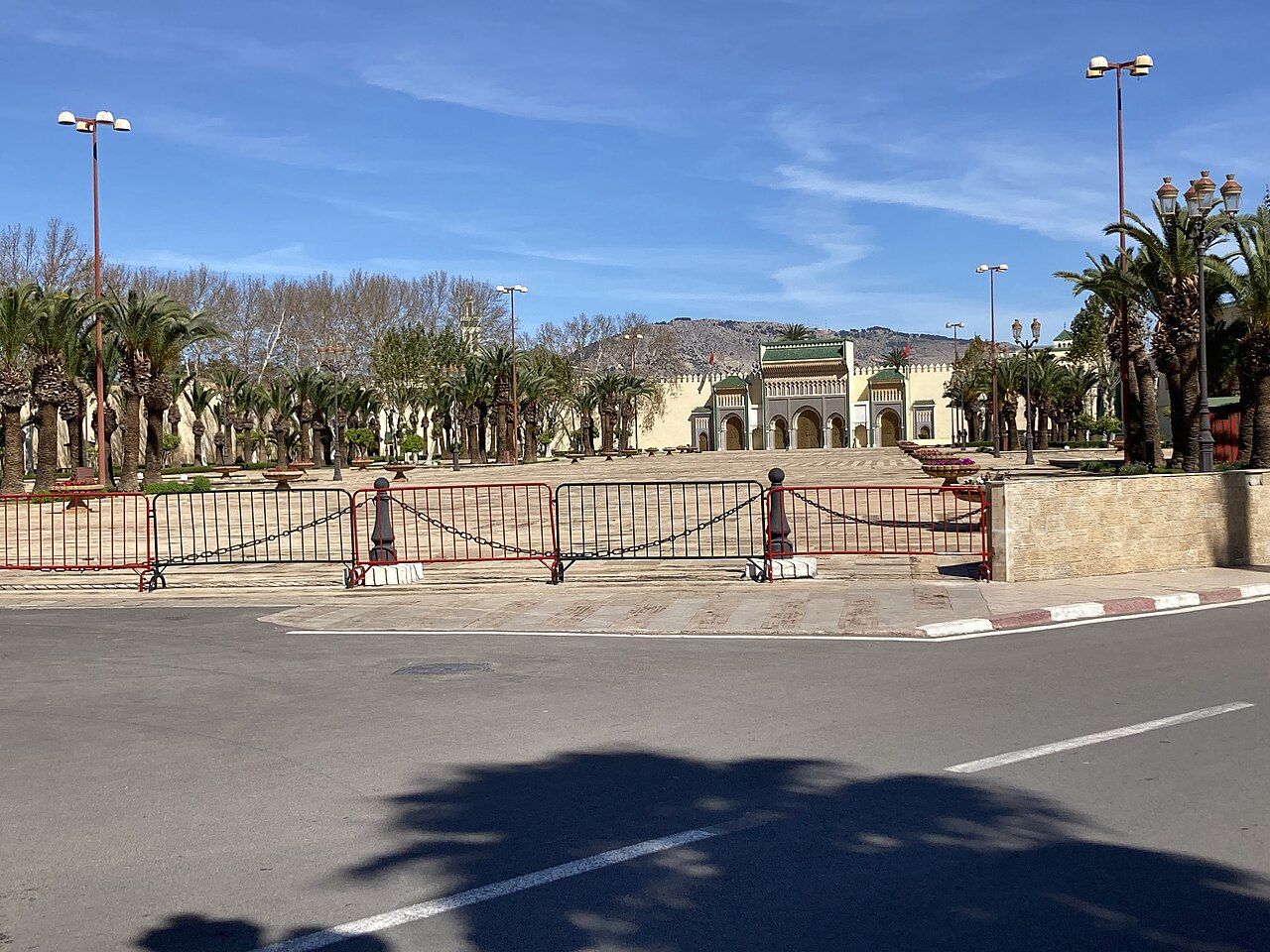
Place des Alaouites is a broad, paved space lined with palms and lamp posts, opening towards the palace façade. It was laid out to give the gates a ceremonial approach, and it works: from the far end of the square you see them framed by trees, with the hills behind. On some visits parts of the square are closed off with barriers, and you see the gates only from a distance. That can be the case at any time, depending on official events.
The square sits right beside the Mellah, the historic Jewish quarter, so the two are easily combined. Our piece on Fès el-Jdid and the Mellah covers the balconied street, the cemetery and the synagogues a few minutes away.
Photographing the gates with care
Photography of the façade from the square is normal, and you will see plenty of other visitors doing it. A few points keep it comfortable:
- Guards stand at the gates. Do not photograph them closely, do not ask them to pose, and follow any instruction to move back.
- Do not touch the doors or lean on the zellige. Keep to where others are standing.
- Drones are not appropriate here. Leave them packed.
- If the square is closed, accept it and come back another day rather than looking for a way round the barriers.
For pictures, a slightly wider lens helps, since the façade is broad and you cannot always step far back. The doors take on different moods through the day, so it is worth passing at more than one hour if you are staying a few days. Early morning brings fewer people; later light warms the brass.
Getting there
From Bab Bou Jeloud, the walk takes about half an hour through Fès el-Jdid, passing along the Grand Rue and into the Mellah. A petit taxi can drop you near the square in a few minutes. Ask for Place des Alaouites, or simply for the palace gates; drivers will know.
There is no ticket and no opening time for the gates themselves, since you are standing in a public square. Visits during official ceremonies or royal stays may be restricted.
How long to stay
Most people spend twenty minutes here, which is enough to look and take photographs. Give it longer if you want to study the craft. Sit for a while on the edge of the square, follow the lines of the zellige panels with your eye, and notice how the patterns repeat and change from one arch to the next. Then walk on into the Mellah, where the houses show a very different face to the street.
The gates are a performance of power, but they are also a display of hands at work: tile cutters, plaster carvers, woodworkers and metalworkers, the same trades you meet in the lanes of the old city, brought together on one wall.