
Riads, gardens and Fès el-Jdid
Dar Batha and its Andalusian garden
A short walk from the blue gate, a royal summer palace holds the city's crafts in its rooms and keeps a quiet walled garden of fountains, cypress and old shade trees.
- From Bab Bou JeloudFive minutes on foot
- PaceEasy
- The way inWalk from Bab Bou Jeloud, Place du Batha
- BringLight jacket for the shade, curiosity about tiles
Most people meet Dar Batha by accident. They come out of the medina at Bab Bou Jeloud, look for somewhere to sit that is not a café terrace, and find a long cream wall with a gate in it. Behind that wall is a palace from the end of the nineteenth century, a museum of the crafts that made Fès famous, and one of the calmest gardens inside the old city's reach.
It is worth planning for rather than stumbling on. An hour here, ideally early in the day before you walk downhill, tunes your eye for everything you will see later in the lanes: the carved cedar, the cut tile, the blue glaze, the plaster worked like lace.
A summer palace on the edge of the old city
Dar Batha was built as a royal residence in the last decades of the nineteenth century, begun under Sultan Moulay Hassan and finished under his son Moulay Abd al-Aziz. It sat at a useful hinge in the city, between Fès el-Bali, the medieval medina, and the newer royal quarter of Fès el-Jdid to the west. Sultans used it for receptions and as a place to escape the heat, and you can still read that purpose in the plan.
The building is wrapped around open space. Long arcades with horseshoe arches run along the sides of the courtyard, their walls painted a pale cream and their doors in dark carved wood. Green glazed tiles edge the roofs, and short flights of zellige steps lead up from the garden to the galleries. Nothing faces the street with any show; all the effort goes inward, as it does in the courtyard houses of the medina.
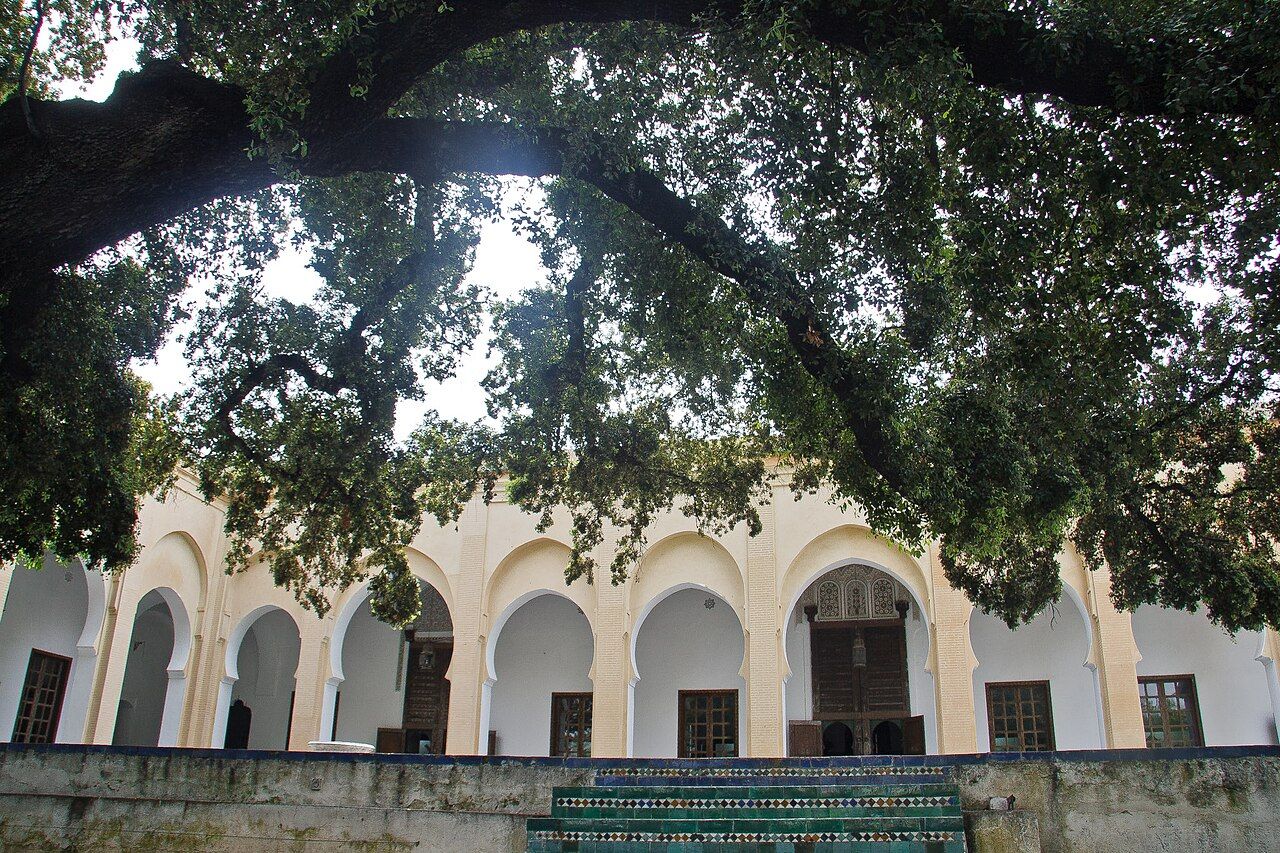
In the early twentieth century, during the French protectorate, the palace was turned into a museum of Moroccan arts, and it has served that role for well over a century. The rooms, the displays and even the museum's focus have been reworked more than once, most recently after a long restoration, so treat any description of a particular case or room as a sketch rather than a promise.
What the collection shows
The museum gathers the things Fès has been good at for centuries. Expect carved and painted wood, some of it salvaged from old religious buildings and fine houses; panels of carved plaster; embroidery and textiles; leather; metalwork; and old carpets from the Middle Atlas and beyond. Scientific instruments such as astrolabes have appeared in the displays too, a reminder that the city was a place of learning as much as of trade.
The ceramics are the part most visitors remember. Fès potters became known for a cobalt blue on a white or cream ground, and the museum has shown older pieces in that style: bowls, jars and big platters painted with dense geometric and floral bands. Seeing them in a quiet room first makes the modern pieces in the souks easier to judge, since you will know what careful painting looks like. The potters' work and the cutting of zellige are covered in our piece on Fès blue pottery and tile.
Labels have been in Arabic and French, with English on some panels. If the written explanations are thin, look closely at joins and edges. Wood that has been carved by hand shows small changes in depth; tile that has been cut by hand has slightly irregular sides. The craft is in those small imperfections.
The garden in the middle
Close by: Nejjarine square, fountain and woodwork
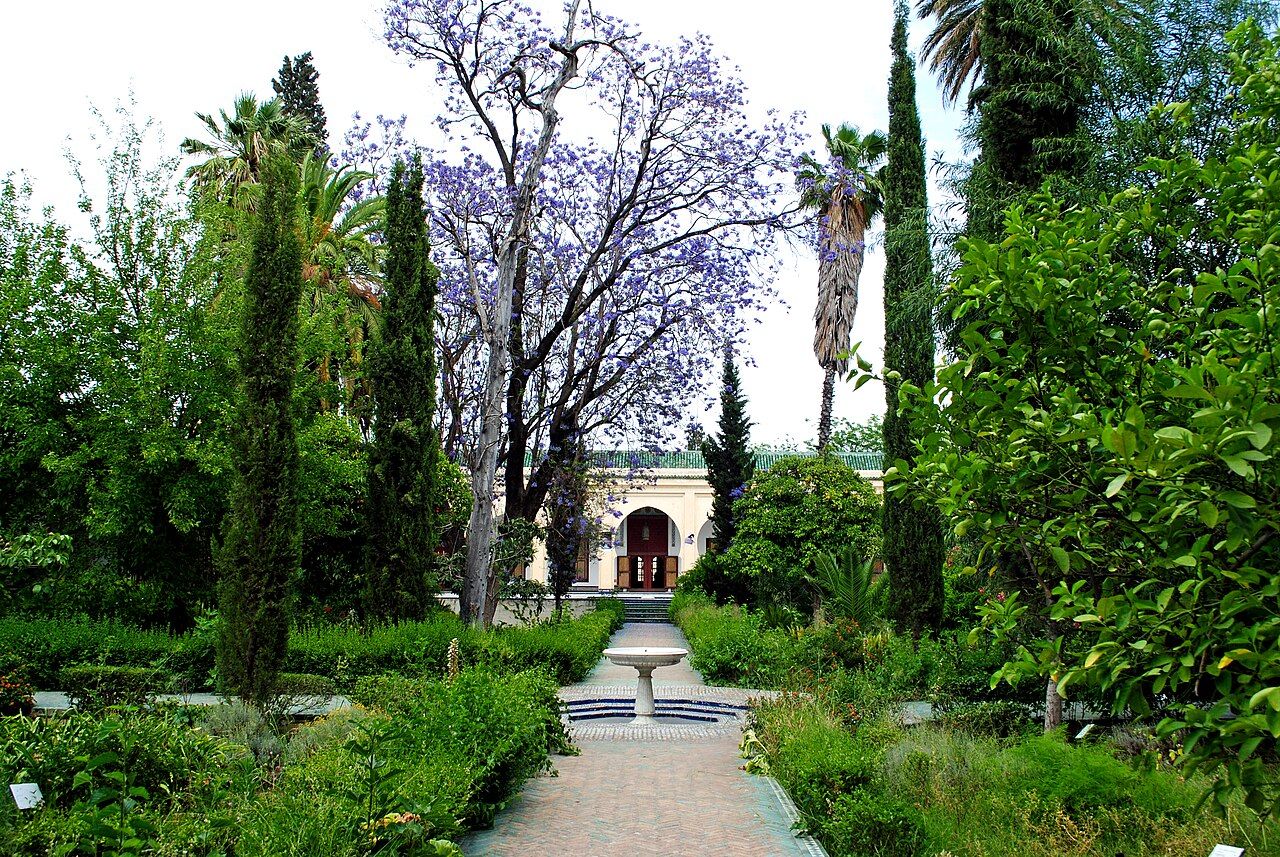
The heart of Dar Batha is its garden, laid out in the Andalusian manner: paths crossing at right angles, a low fountain where they meet, and planted beds sunk a little below the walkways so the flowers sit at eye level when you are seated. Tall cypresses mark the axes. Palms rise above them, orange and lemon trees fill the beds, and climbing plants take over the walls.
Over the top of everything spreads a huge old tree whose branches reach across the courtyard and shade the arcades. On a hot afternoon the drop in temperature under it is real, and benches along the paths fill with people reading or simply sitting. In spring a jacaranda near the palace front turns a soft violet, and the smell of orange blossom drifts across in the early months of the season.
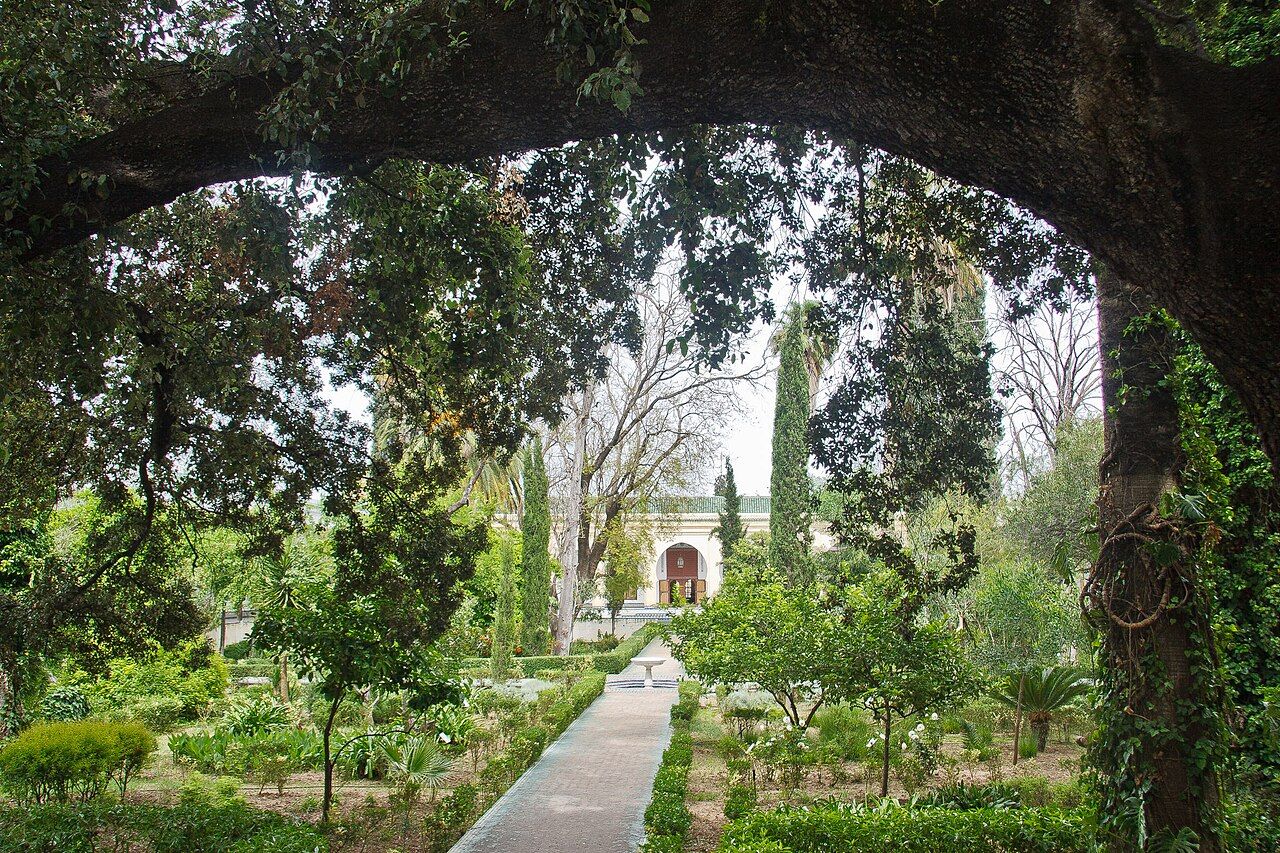
Fountains and running water are not decoration here so much as climate control. Moving water cools the air, the high walls block dust and wind, and the trees hold the shade. It is the same logic that shapes the inner courtyards described in the courtyard house, only larger and with more room for trees.
Music under the trees
The garden has a second life as a stage. The city's festival of sacred music has long used Dar Batha for concerts, with musicians set up beneath the big tree and audiences on chairs among the beds. Smaller events and performances happen through the year too. If one is listed while you are in Fès, an evening in this courtyard is a good way to hear music in the kind of space it was often played in.
A few minutes from the blue gate
Dar Batha is close to the blue gate of Bab Bou Jeloud, reached along a short street from the square. Coming from the medina, you leave by the gate and turn towards Place du Batha; the walk takes a few minutes. Petit taxis can also drop you nearby if you are coming from the new town.
- Hours and fees. The museum has closed for long periods in the past for restoration. Hours are shorter around Friday prayers, public holidays and Ramadan.
- Time needed. An hour covers the rooms and a slow loop of the garden. Add time if you want to sit.
- Photography. Rules for photographing the displays vary; ask at the entrance. The garden is usually easier.
- Light. Morning light falls softly across the arcades, and the garden is cooler before midday.
Dar Batha, then downhill
Because it sits on the edge of the medina rather than inside it, Dar Batha slots easily into almost any plan. One good order is to start here when the doors open, walk the few minutes to Bab Bou Jeloud, and then head downhill into the lanes with the museum's woodwork and tile still fresh in your mind. Another is to finish a long morning in the medina by climbing back up and resting in the garden before lunch.
If you want more green after Dar Batha, the public gardens of Jnan Sbil lie a short walk to the west, with broader lawns, a pool and long avenues of palms. Together they make an easy half day that asks nothing of your sense of direction and gives your feet a rest between the steeper walks of the old city.